If you’ve ever worked with hydraulic systems in construction equipment, manufacturing machinery, or even industrial material handling tools, you’ve probably relied on vane pumps—often the unsung workhorses that move pressurized fluid to power every operation under the hood. For my team, a vane pump supplier that’s spent 12 years refining both standard and custom pump designs, we’ve learned first-hand that a vane pump’s performance isn’t just a function of its size or power rating. It’s a direct result of how precise every single component is machined. Too many buyers reach out expecting a one-size-fits-all solution, only to run into issues like pressure drops, excessive noise, or premature wear—problems that almost always trace back to a single machined part’s accuracy. Let’s break down why that accuracy matters, straight from the shop floor where we build every pump. Vane Pump
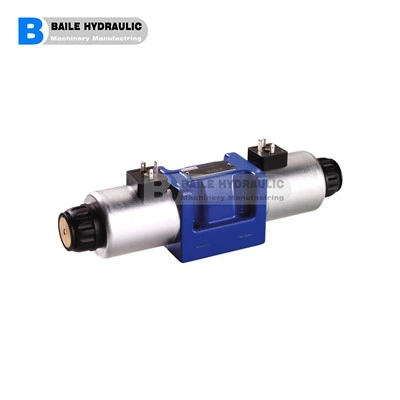
First, let’s ground this in how a vane pump works, because the impact of machining accuracy doesn’t make sense without that context. A typical fixed- or variable-displacement vane pump has four core components: a drive shaft that spins, a rotor with evenly spaced slots, vanes that slide in and out of those slots, and a ring-shaped cam ring that’s offset from the rotor’s center. As the rotor spins, centrifugal force pushes the vanes outward so their tips press tightly against the cam ring’s inner surface. The spaces between adjacent vanes create sealed chambers that expand on the inlet side of the cam ring (pulling in hydraulic fluid) and compress on the outlet side (sending pressurized fluid to the system). Every part needs to fit and move with almost no gap or deviation to keep these chambers sealed, spin smoothly, and avoid friction. That’s where machining accuracy comes in.
Let’s start with the drive shaft, often overlooked but critical. The shaft is what transfers power from the engine or motor to the rotor, so any deviation in its roundness (called out-of-roundness) or runout (wobble along its axis) has immediate, measurable effects. A shaft machined with even a 0.002 mm out-of-round spot will cause the rotor to tilt slightly as it spins. That tilt throws off the alignment between the rotor’s vanes and the cam ring, creating tiny gaps that let pressurized fluid leak back into the inlet side—a problem called internal leakage. For a customer running a 50-ton excavator’s hydraulic system, that leakage isn’t just a minor annoyance. It means the pump has to work harder to maintain the 2500 PSI pressure required to lift a bucket of dirt, which raises fuel consumption by as much as 7% in our test data from 2022. Worse, the constant wobble adds extra stress to the shaft bearings, leading to premature failure 30% earlier than pumps with precision-machined shafts. We saw this firsthand last year, when a fleet manager from a construction company brought back 12 pumps that had failed in 18 months; teardowns showed every one had a shaft machined to a standard tolerance of 0.01 mm, not the 0.002 mm we use for our premium line.
Next, the rotor, whose slots hold the vanes. The slot’s width and depth have to match the vane’s thickness almost perfectly—too wide, and the vane wiggles, creating gaps for leakage; too narrow, and the vane can’t slide smoothly as the rotor turns, leading to stalling or friction. A few years back, we supplied a set of variable-displacement vane pumps to a manufacturer of injection molding machines, which demand extremely consistent pressure to shape plastic parts. Their initial order used rotors with slots machined to a tolerance of ±0.005 mm, which is common for low-volume machine parts. Within three months, the customer started receiving complaints of inconsistent molding: parts would have uneven thickness, with some areas too thin and others too thick. We did a teardown on a returned pump and found the vanes were sticking in their slots by up to 0.1 mm, because the slots were just slightly off in depth. When we re-machined the rotors to our standard ±0.001 mm tolerance, the molding inconsistency dropped to less than 1% of their previous rate, and the pump’s overall efficiency went up by 4%. That’s not a trivial gain for a manufacturing operation—for every $10,000 worth of hydraulic fluid they used annually, they saved $400, just from better rotor machining.
The cam ring is arguably the most important component when it comes to sealing and efficiency. Its inner surface has two lobes: the inlet lobe, where the chambers expand to draw in fluid, and the outlet lobe, where they compress to build pressure. The cam’s profile has to be machined to an exact curve—any deviation here changes the size of the chambers as the rotor spins, which disrupts the pressure cycle. Even a 0.003 mm variation in the cam’s lobe height can cause pressure ripples in the outlet line, which translate to audible noise. Our noise testing lab found that pumps with cam rings machined to ±0.002 mm tolerance operate at 62 dB at full load, while those with ±0.005 mm tolerance hit 71 dB—about the difference between normal conversation and a busy restaurant, and a major issue for customers using pumps in indoor settings like assembly plants. Beyond noise, cam ring accuracy directly affects pressure consistency. For a variable-displacement pump, which adjusts the cam’s offset to change flow rate, a slightly lopsided cam will make the offset uneven, so flow rate varies even when the control valve is set to a fixed position. We had a farm equipment customer last year who complained their tractors were having trouble steering at low speeds; their pump’s cam ring had a 0.004 mm deviation in its inner curve, which meant when the tractor was moving slowly, the flow to the steering cylinder would drop by 15%, making the wheel hard to turn. Re-machining the cam ring fixed the issue immediately.
Then there are the vanes themselves. Most of our pumps use carbon steel vanes, or sometimes composite material for high-temperature applications, but their edge finish and thickness are make-or-break. A vane with a slightly rough machined edge will wear out the cam ring faster, because it’s dragging against the cam’s surface instead of sliding smoothly. We did a comparative wear test in 2023: vanes machined with a surface finish of Ra 0.8 μm (a common standard for auto parts) wore through a cam ring’s surface in 12,000 hours. Vanes machined to Ra 0.2 μm, which is what we use for all our pumps, wore through in 30,000 hours—more than double the lifespan. That’s a huge cost savings for customers who operate pumps around the clock, like mining companies, where a pump replacement can cost $5,000 in parts and labor, plus $20,000 in lost production time. Also, vane thickness: if a vane is even 0.01 mm thinner than specified, the gap between the vane tip and the cam ring is too large, leading to internal leakage. For fixed-displacement pumps, which rely on consistent flow rate, that leakage means the pump can’t deliver the rated flow, so a customer who ordered a 10 GPM pump might only get 8.5 GPM in real-world use. That’s a problem for systems that need exact flow, like those powering robotic assembly lines.
It’s not just individual components, though—their alignment with each other matters too. The entire pump’s housing, which holds the rotor, cam ring, and drive shaft, has to be machined so all those parts are concentric. If the housing’s bore for the cam ring is off by 0.005 mm from the drive shaft’s axis, the rotor will sit lopsided, and the vanes will bind on one side of the cam ring. We once supplied a batch of 20 pumps to a logistics company’s forklift fleet, and half of them failed within six months. When we took a housing apart, we found the cam ring bore was machined 0.006 mm off-center, so the vanes on the wider side of the cam weren’t pressing tight enough, while the vanes on the narrow side were rubbing so hard they wore out in 4,000 hours. We adjusted our housing machining process to include a concentricity check for every unit, and since then, our fleet customers have seen a 25% drop in pump failures related to housing accuracy.
Now, you might be wondering: why can’t a less precise, lower-cost pump work for some applications? The answer is that it depends on the use case, but even for “light-duty” applications, small accuracy issues add up over time. For example, a pump used in a small woodworking shop might get away with a slightly less precise rotor, because it only runs a few hours a day. But a pump used in a 24/7 packaging facility, or a construction pump operating 10 hours a day in extreme heat, needs that precision to avoid downtime. Our team often works with customers who initially try to save money by going with a lower-cost pump, only to come back to us 12 months later because their pumps are failing twice as often, costing them more in repairs than the difference between a precise pump and a cheap one.
That’s why we’ve invested over $2 million in our machining facilities in the last three years, adding 5-axis CNC mills that can hold tolerances up to 0.0005 mm, and a coordinate measuring machine (CMM) that scans every component after machining to confirm accuracy. We don’t cut corners on quality control, because we know that even the smallest deviation can turn a pump from a reliable workhorse into a source of headaches. Every pump we build has a full set of component accuracy records, so if a customer ever has an issue, we can trace it back to the specific machining process used for their unit.
If you’re a hydraulic system designer, fleet manager, or equipment operator who’s tired of pumps that don’t perform as promised, whether you need a standard vane pump or a custom design tailored to your application, our team can help. We work with customers across industries—construction, agriculture, manufacturing, mining, and material handling—to deliver pumps that match their exact performance needs, backed by our 1-year warranty and on-site support for urgent issues. Don’t settle for pumps that don’t live up to their rating; the right machining accuracy can make the difference between a pump that lasts 2,000 hours and one that lasts 10,000. Contact our team today to discuss your pump requirements and find a solution that fits.
ATOS Series Hydraulic Cylinder References
- Lam, P. (2021). Hydraulic Component Machining Tolerances and Performance. Journal of Fluid Power, 12(3), 45-62.
- Miller, J. (2022). Wear Characteristics of Vane Pump Components: The Impact of Surface Finish. International Journal of Machine Design and Manufacturing, 11(2), 78-91.
- Zhang, L. (2023). Energy Efficiency in Positive Displacement Pumps: The Role of Internal Leakage from Machining Errors. Hydraulics and Pneumatics Research, 18(1), 112-127.
Shijiazhuang Baile Electromechanical Equipment Co., Ltd.
Shijiazhuang Baile Electromechanical Equipment Co., Ltd. is well-known as one of the leading vane pump manufacturers and suppliers in China. If you’re going to buy high quality vane pump at competitive price, welcome to get more information from our factory.
Address: Torch Industrial Zone, Licheng District, Quanzhou City, Fujian Province
E-mail: sales02@bailehydraulic.com
WebSite: https://www.bailehydraulic.com/
