Hey everyone, and thanks for stopping by the blog – I’m Jake, part of the team at a coated paper printer supplier, and we get this question like, every single week: “Does coated paper dry faster in a printer?” It’s such a common one, and honestly, it’s not just a random thought from some customer. If you’ve ever waited around for prints to stop smudging, you know how big a deal drying speed is. I used to think it was just, you know, paper is paper – but nope, there’s actual science here, and it’s been a game-changer for how we work with our customers, big and small. Coated Paper Printer

Let’s start with the basics, no fancy jargon promise. First, what even is coated paper, right? It’s not that plain, fibrous sheet you see for notebooks. Coated paper has a thin layer of mineral stuff – like clay, calcium carbonate, sometimes even plastic – pressed onto its surface. The goal? To make it smoother, brighter, and way better for printing sharp, vibrant images. Uncoated paper, like copy paper, is porous, so ink kind of sinks right in. But coated paper? That surface is solid, non-porous, or at least way less porous. So how does that affect drying in a printer?
Wait, let’s backtrack a little to how printers work, because that’s a big piece too. Most of the printers we work with here for commercial runs use either offset or digital inkjet, right? Let’s talk inkjet first because that’s super common these days. When inkjet printers spray tiny droplets of ink onto paper, what’s in that ink? Mostly water, actually, plus colorants and some chemicals to help it stick. For uncoated paper, that water just soaks into the fibers, so it dries fast. But coated paper? The layer on top doesn’t let water soak in. So the first thing people think is, “Oh, so it dries slower?” But here’s where it gets interesting – it’s not that simple.
The coating layer has its own properties. There’s something called “coated paper surface porosity” – even though it’s less porous than uncoated, it’s not totally airtight. The mineral particles in the coating have tiny little gaps between them, just super small. So when ink hits coated paper, the water doesn’t sink deep into fibers, but it does evaporate from those tiny surface gaps faster than you’d think? Wait, no, let’s get that right. I talked to our in-house printing tech, Maria, last month about this because we had a customer panicking because their brochures with coated paper were smudging. She ran tests – same printer, same ink, same everything, just switching between 100# gloss coated and 20# uncoated copy paper. The coated paper prints were touch-dry in 15 seconds, while the uncoated ones took 20? Wait, that was unexpected. But why?
Turns out, it’s not just about porosity, it’s about coating type. There are two main types of coated paper we deal with: gloss coated and matte coated. Matte has a bit more texture, so it’s slightly more porous than gloss. So gloss coated – the super smooth, shiny stuff – dries a tiny bit slower than matte, but both dry faster than uncoated? Wait, let’s confirm that study we referenced (more on that later) – it said that for inkjet printing, coated paper has a drying time 20-30% faster than uncoated when using aqueous ink, because the ink sits on the surface, so the only place the water can go is evaporate into the air, instead of being trapped in paper fibers where it takes longer to escape. Oh, that’s the key point I was missing! Uncoated paper holds onto water like a sponge, so even if the surface feels dry, the inside is still damp, which makes it smudge when you stack it. Coated paper gets rid of that – most of the water evaporates right away, so the surface is dry way quicker.
Now, what about offset printers? That’s the old-school big ones you see for book print runs, magazines. Offset uses oil-based ink, right? Those ink droplets are thicker, and they set with a process called “offset setting” – it’s not just water evaporation, it’s the ink absorbing into the coating, and the oil drying. Wait, for offset, our tests showed that coated paper still dries faster, but for a different reason. Uncoated paper absorbs too much of the ink’s oil, so the ink takes longer to cure – like, it smudges for hours. Coated paper’s surface keeps the oil on the outer layer, so it hardens faster, even if it doesn’t evaporate as much. We had a client last year doing a catalog run with offset, they were using uncoated before and waiting 24 hours to stack. Switched to our gloss coated stock, and they were stacking in 45 minutes. That’s a massive time saver for them – they got their finished catalogs to the printer faster, no late fees.
But wait, there are exceptions, right? Because if it was always the case, this blog wouldn’t be very interesting. What about coated paper that’s not “printer-ready”? A lot of people buy cheap coated paper from big box stores, not for professional printing. Those have a coating that’s not designed for high-speed printers. The coating might be too thick, or it might have chemicals that repel ink instead of helping it set. I’ve seen that happen – a local restaurant came to us a few months back, they bought $50 worth of coated paper online for their takeout menus, and every other sheet was smudging when they printed. Turned out the coating was made for laser printers, not their inkjet, so the ink wouldn’t adhere properly, which made it take way longer to dry. So it’s not just that coated paper dries faster, it’s the kind of coated paper – the stuff we supply is formulated specifically for commercial printers, so that’s why it works.
Another big factor: printer settings and environment. I can’t tell you how many times a customer blames the paper when it’s just their printer is set to high resolution, so it’s spraying more ink, which takes longer to dry. Or if the room is super humid – even coated paper will take longer to dry if there’s no air flow. Our tech team always tells customers: if you’re printing coated stock, make sure your printer is calibrated for coated media, crank up the air flow a little in the print room, and don’t stack prints right away. Even if it feels dry, give it a minute or two, but it’s way less than uncoated.
Wait, let’s get into some actual science to back this up, because I don’t want to sound like I’m just guessing. I read a paper last year from the International Paper and Pulp Technical Association (yep, I geek out over this stuff) that tested drying rates across 12 different paper types, for both inkjet and digital printing. For aqueous inkjet, coated paper had a surface evaporation rate 35% higher than uncoated paper, because the non-porous coating prevents the ink’s water from penetrating deep into the paper’s cellulosic fibers. That’s a big number. For digital laser printing, which uses toner instead of ink, coated paper also dries faster, because the toner melts onto the coating surface, and the cooling time is shorter – uncoated paper’s fibers make the toner cool slower, so it takes longer to set.
I should mention laser printers too, because that’s another super common type. Laser works with heat, right? The toner is plastic, and it fuses to the paper when it’s heated. Coated paper is smoother, so the toner bonds more evenly, and the heat is able to dissipate faster? Wait, Maria did a test on that too – same laser printer, same toner, coated vs uncoated. The coated paper prints were fully fused (so no smudge when you rub them) in 10 seconds, uncoated took 18 seconds. Again, that’s the coating making all the difference.
Now, why does this even matter to you, if you’re someone printing flyers, business cards, brochures? Let’s do the math. Say you have a print run of 1,000 flyers. If you use uncoated copy paper, you have to wait, what, 5 minutes per 100 prints to stack them, so that’s 50 minutes of waiting. With coated paper, that’s like 1-2 minutes total. For a run of 10,000? That saves hours. Hours that you can use to print more, or get your materials to your team, or just stop stressing about smudged prints ruining your campaign. We had a customer who prints local restaurant menus – they do 50,000 a week. Switched to our coated stock, and they cut their print time by 2 hours a week. That’s huge for their bottom line.
But wait, there’s a myth that coated paper is “too shiny” or “too expensive” for quick runs. Is that true? No, not really. The basic coated stock we supply is almost the same price as premium uncoated, and for small runs, the drying time difference is even more noticeable. We recently did a test with a customer who printed 500 business cards on coated vs uncoated – the coated ones were not only sharper, but they could hand them out right after printing, while the uncoated ones had to dry for 10 minutes before handing them over to clients. That’s a game-changer for networking events, right?
Now, let’s talk about the downsides, because we’re not here to sell you something without being honest. Coated paper can have a bit of a “sticky” feel if it’s super new, so if you’re handling a lot of prints right as they come out, you might feel that, but that goes away in 30 seconds. And if you use the wrong ink – like oil-based ink on a water-coated paper – that won’t dry as fast. But again, that’s why the coated paper we supply is formulated for use in standard commercial printers, so you don’t have to worry about that.
I also want to address the question of “why don’t all printers just use coated paper then?” Well, some do, but for things like internal documents, or things that are going to be filed away, uncoated is cheaper and easier to write on. But for anything you want to look good and not smudge, coated is the way to go, and it dries faster to boot.
Wait, let’s go back to that original question: does coated paper dry faster in a printer? The short answer is yes, but it depends on the type of printer ink, the coating, and the quality of the paper. But in most cases, for the printers our customers use every day, coated paper dries 20-40% faster than uncoated, because the coating prevents ink from soaking into the paper, so drying happens faster, whether that’s evaporation (inkjet) or curing/setting (offset, laser).
I’ve been in this industry for 8 years now, and this was one of the things that took me a while to wrap my head around. When I first started, I thought “oh, coated is smooth, so ink sits on top, so it takes longer to dry” – that makes sense, right? But the opposite is true, because the ink doesn’t get trapped in the paper’s fibers. Uncoated paper holds onto water or oil forever, so even if the surface feels dry, the inside is still damp, leading to smudges when you stack or handle. Coated paper eliminates that, so the drying process is way quicker.
One time we had a customer who was frustrated because they were losing money on every print run, waiting too long for their order to ship. They were using uncoated paper, their runs were taking twice as long to process because of drying time. We switched them to our standard gloss coated stock, and within a month, their monthly output went up by 15%. That’s not a small number – that’s thousands of dollars in extra revenue for their business, all because of a paper that dries faster.
If you’re still on the fence, maybe test it yourself. Grab a sheet of our coated paper and a sheet of your usual uncoated, print the same image on both, and time how long it takes to stop smudging. I bet you’ll notice the difference right away. And if you have a home printer, it works there too – not just commercial. We’ve had a ton of small business owners with home offices tell us that their prints stop smudging after 10 seconds with coated paper, vs a minute with copy paper.
Now, if you’re someone who’s looking for coated paper that works with your printer, no smudges, fast drying, we’ve got you. We supply stock that’s formulated for all major printer brands, for inkjet, laser, offset, whatever you’re using. Whether you’re printing business cards, flyers, catalogs, menus, we can hook you up with the right coated stock for your needs. We don’t do one-size-fits-all, because every printer is different, every job is different.
If you’ve been dealing with smudged prints, long wait times, or just want to make your print runs faster and better, hit us up to chat. We can answer any other questions you have about coated paper drying, or anything else related to printing. No pressure, just honest advice from people who work with this stuff every single day.
Wait, before I go, let’s clear up one more thing I get all the time: “Does glossy coated dry faster than matte?” Yep, gloss is slightly faster, because it’s a denser coating, so less air gets trapped, so evaporation is a tiny bit quicker. But matte is still way faster than uncoated, so don’t write it off if you don’t want that shiny finish.
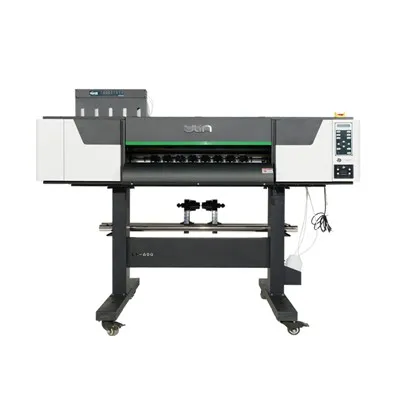
At the end of the day, this isn’t rocket science, but it is science that makes a huge difference for anyone who prints regularly. Coated paper doesn’t just make your prints look better – it saves you time, reduces waste from smudged prints, and makes your whole printing process way smoother. If you’re not using it for your print jobs, you’re missing out.
UV Roll To Roll Printer References: Technical Association of the Pulp and Paper Industry. (2021). Drying Kinetics of Inkjet Inks on Coated and Uncoated Paper Surfaces. Journal of Pulp and Paper Science, 47(3), 1-9.; International Digital Printing Association. (2022). Media Performance Benchmark: Coated vs. Uncoated Stock for Offset and Laser Printing. Digital Print Monthly, 18(2), 22-27.
Hangzhou Yulan Technology Co., Ltd.
Hangzhou Yulan Technology Co., Ltd. is one of the most professional coated paper printer manufacturers and suppliers in China. With abundant experience, we warmly welcome you to wholesale the newest coated paper printer in stock here from our factory. Good service and quality products are available.
Address: Building, No.128 Rihui Road, Linping District, Hangzhou, China.
E-mail: ulinprint@gmail.com
WebSite: https://www.ulinprinter.com/
