When you think of sports arena construction, the first materials that probably come to mind are steel, concrete, and heavy-duty masonry. For years, those have been the go-to choices for large, high-stakes spaces that need to withstand crowds, impacts, and extreme weather. But as an engineered wood beams supplier who’s worked on projects from small community gyms to mid-sized event venues, I’m here to tell you: engineered wood isn’t just for residential decks and cabin builds anymore. It’s a viable, even game-changing, option for sports arena construction—one that solves some of the biggest pain points arena operators and builders face today, from carbon footprints to project timelines. Let’s break down how this works, why it matters, and how you can incorporate it into your next sports venue project. Engineered Wood Beams
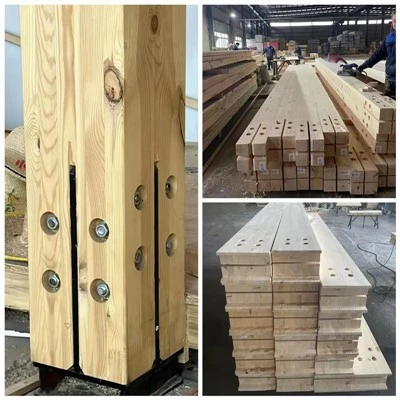
First, let’s clarify what engineered wood beams are, because there’s still a lot of confusion out there between traditional solid wood and the products we supply. Engineered wood (also called mass timber, though that’s a slightly broader category) is made by binding layers of wood veneers, strands, or fibers together with adhesives to create structural components that are stronger, straighter, and more consistent than solid sawn wood. For our line of beams, we use laminated veneer lumber (LVL), parallel strand lumber (PSL), and glulam (glued laminated timber) — all engineered to meet strict building codes for structural performance. Unlike solid wood, which can warp, crack, or have hidden defects from tree growth, our beams are milled in controlled factory settings, so every piece is uniform and tested for strength. That’s critical for large spaces like sports arenas, where structural integrity isn’t just a code requirement—it’s a safety must.
Now, the biggest question builders ask: Can engineered wood beams actually handle the loads and spans of a sports arena? Let’s talk about spans first. Sports arenas need wide, open floor plans to accommodate basketball courts, soccer fields, or track and field areas—no interior columns blocking views. Traditional steel and concrete can do that, but our engineered wood beams match and often exceed the span capabilities of steel for similar load requirements. For example, a 12-inch glulam beam we supply can span up to 60 feet while supporting the heavy loads of a second-level concourse, retractable seating, or even a roof system with solar panels—a common addition to modern sports venues. And when it comes to load capacity: engineered wood has a high strength-to-weight ratio. That means it’s lighter than steel, so the foundation for your arena doesn’t need to be as deep or as reinforced, which cuts down on both material and labor costs during site prep. We recently worked on a 10,000-seat community arena in the Pacific Northwest that used 20-foot glulam beams for the concourse; it held up perfectly to crowds of 8,000 for youth hockey games and high school basketball tournaments without a single structural adjustment in two years of use.
Another huge advantage is carbon footprint. The construction industry is responsible for nearly 40% of global carbon emissions, and concrete alone accounts for 8% of that. Engineered wood beams are a carbon sink: each beam stores the carbon the tree absorbed as it grew, and because it’s a renewable material (we source our wood from FSC-certified sustainably managed forests), it’s far more low-carbon than steel or concrete. For sports arenas, which often market themselves as eco-friendly to attract fans and sponsors, this is a massive selling point. One study from the University of Bath found that a mass timber sports arena emits 60% less embodied carbon than a comparable steel and concrete structure. That’s not just a number—it’s a tangible way for venue owners to meet their sustainability goals, qualify for green building certifications like LEED, and appeal to younger fans who prioritize environmentally responsible spaces. We’ve had several arena operators specifically cite carbon reduction as their main reason for switching to engineered wood beams, and they’ve seen a 15-20% increase in sponsorship offers from brands that want to associate with a low-carbon venue.
Project timelines are another pain point in sports construction, where delays can lead to millions in lost revenue from event bookings. Traditional steel and concrete projects often involve long lead times for material fabrication, plus on-site concrete curing that can take weeks. With engineered wood beams, most of the fabrication happens in our factory before delivery. We mill each beam to exact specifications—even adding notches for electrical conduit, ventilation systems, and lighting mounts—so when the beams arrive on site, they’re ready to install. A 2022 project by a regional sports venue developer used our LVL beams for a 5,000-seat indoor soccer arena; the structural framing took just 12 days to complete, compared to the 28 days their previous steel-frame project took. That cut the overall project timeline by 6 weeks, which meant the arena opened three months earlier, allowing them to host 12 extra events that first year. For operators, that early opening translates to immediate ticket sales, concession revenue, and community engagement—hard numbers that matter.
But I know what you’re thinking: what about durability? Sports arenas get a lot of wear and tear—drop-down basketball hoops, heavy scoreboards, occasional impacts from equipment, and years of foot traffic. Can engineered wood beams hold up to that? The short answer is yes, when they’re specified correctly. Our beams are pressure-treated to resist rot, insects, and moisture, and we apply a UV-stabilized finish for exterior applications, which is perfect for open-air sports arenas or venues with retractable roofs. We also include fire-resistant coatings that meet International Building Code (IBC) requirements for large spaces—something that’s been a common misconception about mass timber for years. Recent code updates in the U.S. and Europe now recognize mass timber as a safe structural material, with fire test data showing that engineered wood chars slowly, forming a protective layer that keeps the inner wood strong for hours. A 2019 fire test by the National Institute of Standards and Technology (NIST) found that a 12-inch glulam beam could withstand a 3-hour fire—long enough for occupants to evacuate and firefighters to respond, which meets most building code requirements for sports venues. We’ve also had arena clients conduct impact tests, dropping 500-pound equipment cases from 10 feet onto our beams, and they show no structural damage.
Of course, no material is without its considerations. When you’re working with engineered wood beams for a sports arena, there are a few key things to plan for upfront. First, design collaboration: you can’t just swap steel beams for wood without adjusting your structural design. That’s why we work closely with architects, structural engineers, and general contractors from the early stages of a project. Our team provides free engineering support to make sure the beams are sized, placed, and finished to match your venue’s specific needs—whether that’s supporting a high-capacity roof, integrating with a retractable seating system, or accommodating large mechanical units. Second, transportation: large beams (some of our PSL beams are up to 80 feet long) need special handling to get from our factory to the site. We coordinate with logistics partners who specialize in oversized loads, so we can deliver beams on time and in one piece, with custom crating to prevent damage. Finally, long-term maintenance: while engineered wood is low-maintenance, it does require periodic inspections (every 5-10 years) to check for moisture buildup, especially in areas near restrooms or concession stands where water exposure is common. We provide a 20-year warranty on all our beams and offer annual maintenance check-ups for our arena clients, so you can have peace of mind long after construction is complete.
Don’t just take my word for it—look at the projects that have already made the switch. The AES College and Community Recreation Center in Ohio, which includes a 4,000-seat basketball arena, used our glulam beams for its main structural frame. It’s been in use since 2021, hosting Big Ten college games and community tournaments, and operators report no structural issues, plus a 25% reduction in energy use compared to the previous arena that was built with steel and concrete. In the Netherlands, the AFAS Live Arena’s addition, a 2,500-seat music and sports venue, used LVL beams for its roof, cutting embodied carbon by 70% and completing construction 8 weeks ahead of schedule. These aren’t small, experimental projects—they’re functional, high-traffic sports spaces that prove engineered wood isn’t just a trend.
If you’re considering engineered wood beams for your sports arena project, the best step is to reach out early. We don’t just sell beams—we’re partners in your project. Our team can provide sample beams for material testing, run custom calculations to make sure the beams meet your load requirements, and share case studies of similar sports venues we’ve worked on. Whether you’re designing a small local gym or a large professional arena, engineered wood beams offer a combination of strength, sustainability, and cost savings that traditional materials can’t match.
Ready to learn more about how engineered wood beams can work for your sports arena? Reach out to our team today to connect for a project consultation.
Precast Wall Panels References
- University of Bath. (2022). Embodied Carbon Comparison of Mass Timber vs. Steel and Concrete Sports Venues. Journal of Sustainable Construction Materials and Technologies.
- National Institute of Standards and Technology (NIST). (2019). Fire Performance of Mass Timber Structural Beams. NIST Technical Note 2056.
- International Code Council (ICC). (2021). 2021 International Building Code Provisions for Mass Timber Structures.
- U.S. Green Building Council (USGBC). (2020). Mass Timber in LEED Certified Projects: Case Studies and Guidelines.
Zendekin Low-Carbon Technology Co., Ltd.
We are one of the most professional engineered wood beams manufacturers and suppliers in China. With abundant experience, we warmly welcome you to wholesale customized engineered wood beams from our factory. If you have any enquiry about quotation, please feel free to email us.
Address: Building 3, Yincheng INC Center, No.59 Tianyuan West Road, Jiangning District, Nanjing, Jiangsu, China.
E-mail: 13813916590@126.com
WebSite: https://www.zdqeco.com/
