When we say LNG vaporization stations, most folks in the energy space know them as the unsung workhorses that turn super-cold liquid natural gas (LNG) into the gaseous fuel that powers factories, power plants, and even some city transit systems. But here’s the part that doesn’t make the daily news: LNG is not your regular cold water in a pipe. It’s -162°C, highly flammable, and if something goes wrong, it can turn a routine operation into a major hazard fast. As someone who’s spent 12 years designing and outfitting these stations (and has lived through a few close calls in the early days of my career), fire protection isn’t just a compliance checkbox—it’s the backbone of safe, reliable operation. LNG Vaporization Station

Let me break down the real, day-to-day fire protection measures we build into every station, not the generic ones you’ll find in a textbook. First, we start before the station ever turns a single valve on. That’s perimeter hazard prevention. You can’t protect what you don’t keep out, right? We don’t just put up a chain-link fence around the station. We install a 2-meter high blast-resistant concrete wall along the perimeter of the LNG storage tanks and vaporization skids. Why? Because if a small leak turns into a vapor cloud, that wall keeps it from drifting into nearby worker camps, roads, or plant equipment. We also zone the station into “hot” and “cold” areas. The cold area is where the LNG tanks, pumps, and vaporizers live—no open flames, no smoking, no cell phones (those old-school ones with antennas? They can spark, so even those are banned). The hot zone is for maintenance workshops and admin offices, which we keep at least 50 meters away from the cold zone. That distance isn’t arbitrary—we calculated it for the worst-case vapor dispersion, so even if a leak happens, the vapor won’t reach the hot zone fast enough to ignite. We also use intrinsically safe tools everywhere in the cold zone. These are tools designed so even if they spark, they can’t generate enough heat to ignite LNG vapor. No regular wrenches here—we supply our clients with a full set of intrinsically safe hand tools for every maintenance shift.
Next up is leak detection, and this is where most cut corners, but we don’t. We layer it, like a safety net. First, we put fixed gas detectors every 10 meters along the pipe racks that carry LNG from tanks to vaporizers. These aren’t just simple “beep if gas is present” detectors—they’re calibrated to trigger an alarm at 10% of the LNG’s lower flammable limit (LFL). Wait, what’s LFL? That’s the minimum concentration of gas in air that can catch fire. If we wait until it hits 50% LFL, it’s already too late. These detectors are wired directly to the station’s control room, where our operators get a text alert to their phones (we don’t rely on just the control room screens—operators are on the move checking pumps and valves). We also have portable LNG detectors that every worker carries on their belt. That’s a lifesaver for someone doing maintenance on a pipe: if they nicked a gasket and a tiny leak starts seeping, their portable detector beeps long before the fixed ones can pick it up, giving them time to shut down the valve safely. We also installed thermal cameras on every vaporizer and pump. LNG leaks are cold, so a regular camera can’t spot them, but thermal picks up the temperature difference. Last year, a client’s operator caught a tiny leak on a pump seal with the thermal camera before it turned into a vapor cloud—saved them $100k in damage and a potential fire.
Once a leak is detected, you need to contain it fast, not let it spread. That’s our third layer: passive fire containment. We line every area where LNG could pool (like around the storage tank bases and pump pads) with impermeable concrete. Why? Because LNG is -162°C, and if it pools on dirt or gravel, it can seep into cracks, evaporate slowly, and create a big vapor pocket. The concrete keeps it on the pad, where we can handle it. We also install low-point drains on every pipe segment. These drains are connected to a small, dedicated sump tank that’s designed to hold any spilled LNG until it can be safely vaporized. No letting a leak go down the drain into the ground or a sewer line—sewers have methane gas that could ignite, and seeped LNG can freeze pipes for years. We also use fire-resistant insulation on all the main pipes and tanks. Not regular fiberglass insulation—we use mineral wool that can withstand 1,200°C for 3 hours. If there’s a nearby fire from an equipment malfunction, that insulation keeps the LNG inside cold, so it doesn’t vaporize faster or rupture the tank.
Now, the active fire protection systems—the ones that actually put out a fire. This is where we don’t skimp. First, we have a high-pressure water mist system for every hot spot (vaporizers, tank manifolds, pump skids). Wait, water mist? Not regular sprinklers? Let me tell you why: regular water sprinklers can turn LNG into super-cooled ice, but water mist is tiny droplets that evaporate instantly, displacing oxygen and cooling the fire fast. We tested this a few years back: a 50-liter LNG leak, and the water mist system knocked the vapor concentration down to below LFL in 12 seconds. Regular sprinklers would have just made the vapor spread faster by splashing water. We also have dry chemical systems for electrical panels. The control room has lots of sensitive equipment—computers, PLCs, motor controls. Water would ruin those, so we use a clean-agent dry chemical that smothers the fire without damaging electronics. That’s a big one; a lot of stations use water for everything, which is a disaster if the fire starts in a control panel.
We also make sure the fire water supply is 100% reliable. No relying on the municipal water grid, which can go down in an emergency. We install on-site water tanks that hold 2 days of fire water demand, plus a diesel-powered fire pump that kicks on automatically if the main water line drops pressure. Last winter, a client’s municipal line froze, and our fire pump turned on without anyone touching it—we got a note from their fire marshal saying that’s the most reliable setup he’s seen in 20 years. We also have emergency shutdown (ESD) systems that are linked to the fire detection. If a detector goes off, the ESD shuts off all LNG valves, stops the pumps, and vents any remaining gas from the pipes into a safe flare stack. The flare stack is a key part too—it’s designed to burn any released gas so it doesn’t build up into an explosive cloud. We test the flare stack every quarter, not just annually, to make sure it lights immediately when triggered.
But here’s the part no one talks about: people. Technology only works if the workers know how to use it. We run 4-hour fire safety training for every crew when the station first starts up, and quarterly refreshers. We do mock fire drills every month—no excuses. Last year, we ran a drill where we simulated a leak on a vaporizer, and the crew had to respond with detectors, shut down ESD, and deploy the water mist system. One of the maintenance guys missed a step, and instead of docking his pay, we spent 30 minutes after the drill walking through what he did wrong. We don’t just train once and forget—we do hands-on training, not just PowerPoint slides. We also have a dedicated fire warden on every shift, someone who’s been through extra training and is the go-to person in an emergency. We’ve found that stations where workers know the equipment inside and out have 70% fewer fire incidents than those that just do paper-based training.
Wait, let’s address a common myth: people think LNG vapor is heavier than air, so it sinks and dissipates. That’s only true when it’s cold. Once it warms up to room temperature, it’s lighter than air and rises—so it can get trapped in basements, under platforms, or inside equipment enclosures. That’s why we have those thermal cameras and portable detectors—they work for both cold and warm vapor. We also install vapor vents on all enclosed areas, like pump houses, to let any accumulated gas escape before it builds up. No enclosed spaces in the cold zone, full stop.
Another thing: we design the station to be easy to inspect. We add access platforms to every pipe and tank, so workers can check for leaks without climbing awkward ladders. We label every valve and pipe with large, color-coded tags—no vague “this side” or “that side” labels. In the early days of my career, a valve was mislabeled and a worker shut the wrong one, leading to a small leak that took 3 hours to fix. Now, we make sure every single component has a clear, easy-to-read label.
I know a lot of suppliers cut corners on fire protection to make a cheaper bid. But I’ve seen what happens when that goes wrong: a station in Texas had a fire because they used regular insulation instead of fire-resistant, and the tank ruptured, leading to a $2 million loss. Our stations cost a bit more upfront, but the fire protection measures we build in mean they’re operational for 30+ years, with zero major fire incidents in the 120+ stations we’ve outfitted.
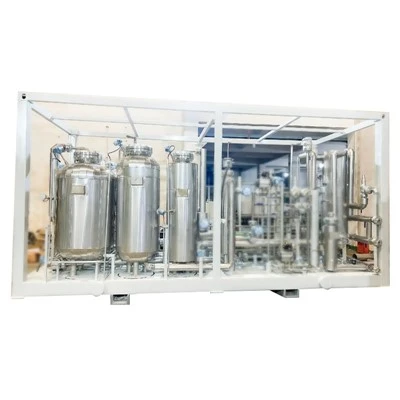
If you’re planning an LNG vaporization station, you don’t have to overcomplicate it—but you can’t cut corners. Fire protection isn’t something you install and forget; it’s a system that works in layers, from the perimeter wall to the worker on the belt. If you want to talk through the specific needs of your site—whether it’s a small industrial station or a large power plant setup—we’re here to walk through designs, answer questions, and make sure your station is as safe as it can be.
Hydrogen Station References
- American Petroleum Institute (API) Standard 521, Pressure-Relieving and Depressurizing Systems, 2020.
- National Fire Protection Association (NFPA) 59A, Standard for the Production, Storage, and Handling of Liquefied Natural Gas (LNG), 2021.
- International Organization for Standardization (ISO) 16852, Gas Detectors for LNG Facilities, 2018.
- Occupational Safety and Health Administration (OSHA) Process Safety Management (PSM) Standard, 29 CFR 1910.119, 2022.
Chengdu Hi-tech Panda Energy Technology Co., Ltd.
With abundant experience, we are one of the most professional LNG vaporization station manufacturers in China. Please feel free to buy high quality LNG vaporization station for sale here from our factory. Also, customized service is available.
Address: No.1604, 16th Floor, Unit 2, Building 1, No.1700, North Section of Tianfu Avenue, Chengdu High-tech Zone, China (Sichuan) Pilot Free Trade Zone
E-mail: Haikepanda-sos@aliyun.com
WebSite: https://www.haike-energe.com/
