When it comes to acoustic treatment, one of the most frequently asked questions I encounter as a supplier of acoustic panel wall panels is whether these panels are effective at blocking low – frequency sounds. Low – frequency sounds, typically in the range of 20 Hz to 200 Hz, present unique challenges in the world of acoustics, and understanding how acoustic panel wall panels interact with them is crucial for anyone looking to optimize the sound quality in a space. Acoustic Panel Wall Panel
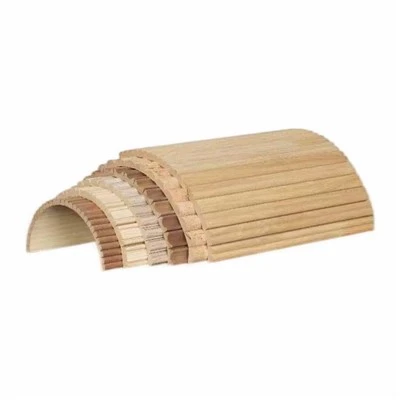
Understanding Low – Frequency Sounds
Low – frequency sounds are characterized by long wavelengths. Unlike high – frequency sounds, which have short wavelengths and can be easily absorbed or blocked by a variety of materials, low – frequency waves can penetrate through many common barriers. These sounds are often associated with bass notes in music, the rumble of traffic, or the vibrations of industrial machinery. In environments such as recording studios, home theaters, or open – plan offices, low – frequency noise can be a significant distraction and can degrade the overall acoustic experience.
How Acoustic Panel Wall Panels Work
Acoustic panel wall panels are designed to absorb sound energy, reducing reflections and echoes in a room. They are typically made from porous materials such as fiberglass, mineral wool, or foam. When sound waves hit the surface of an acoustic panel, they enter the pores of the material. Inside the pores, the sound energy is converted into heat energy through friction between the air molecules and the fibers of the material. This process effectively reduces the amount of sound that is reflected back into the room.
The Limitations of Acoustic Panel Wall Panels in Blocking Low – Frequencies
While acoustic panel wall panels are highly effective at absorbing high – and mid – frequency sounds, their performance in blocking low – frequency sounds is more limited. The main reason for this is the relationship between the wavelength of the sound and the thickness of the panel. As mentioned earlier, low – frequency sounds have long wavelengths. To effectively absorb or block these long – wavelength sounds, a panel would need to be extremely thick, often much thicker than what is practical or cost – effective in most applications.
Most standard acoustic panel wall panels are designed with thicknesses ranging from 1 inch to 4 inches. For high – and mid – frequency sounds, these thicknesses are sufficient to achieve significant absorption. However, for low – frequency sounds, the panel may only have a minimal effect. The long wavelengths of low – frequency sounds can pass through the panel without being fully absorbed, resulting in a reduced level of attenuation.
Strategies to Improve Low – Frequency Absorption
Although acoustic panel wall panels alone may not be able to completely block low – frequency sounds, there are several strategies that can be employed to improve their performance in this area.
Increased Thickness
One straightforward approach is to use thicker acoustic panel wall panels. By increasing the thickness of the panel, more of the low – frequency sound wave will interact with the porous material, increasing the likelihood of absorption. For example, instead of using a 1 – inch panel, a 4 – inch or even 6 – inch panel may be more effective at absorbing low – frequency sounds. However, this approach may not be feasible in all spaces, as it can take up more wall space and may increase the cost of the acoustic treatment.
Use of Low – Frequency Traps
Low – frequency traps are specialized acoustic devices designed specifically to target low – frequency sounds. These traps typically consist of Helmholtz resonators or bass traps. Helmholtz resonators are chambers with a small opening that are tuned to a specific low – frequency range. When a sound wave of the targeted frequency enters the opening, it causes the air inside the chamber to resonate, and the sound energy is dissipated as heat. Bass traps, on the other hand, are typically made from thick, dense materials and are designed to absorb low – frequency sound waves at corners of a room, where low – frequency energy tends to accumulate.
Combining acoustic panel wall panels with low – frequency traps can significantly improve the overall low – frequency absorption in a space. The acoustic panels can continue to handle high – and mid – frequency sounds, while the low – frequency traps focus on the problematic low – frequency range.
Construction of Mass – Spring Systems
Mass – spring systems, also known as double – wall or resilient channel construction, can be used to block low – frequency sounds. In this approach, a second layer of drywall is installed on a resilient channel, creating a spring – like effect between the two layers. The mass of the drywall and the flexibility of the resilient channel work together to isolate the room from low – frequency vibrations. This construction method can be used in conjunction with acoustic panel wall panels to provide a comprehensive acoustic solution.
Real – World Applications
In real – world applications, the effectiveness of acoustic panel wall panels in dealing with low – frequency sounds depends on the specific requirements of the space.
Recording Studios
Recording studios require precise control of acoustics, especially when it comes to low – frequency sounds. While acoustic panel wall panels are an essential part of the acoustic treatment in a studio, they are often supplemented with low – frequency traps and careful room design. For example, bass traps may be placed in the corners of the studio to absorb low – frequency reflections, while acoustic panels are used on the walls and ceiling to control high – and mid – frequency sounds.
Home Theaters
Home theaters also benefit from a combination of acoustic treatments. Acoustic panel wall panels can help to reduce echoes and improve the clarity of dialogue, while low – frequency traps can enhance the bass response and prevent low – frequency rumbles from affecting the viewing experience. By carefully selecting and installing acoustic treatments, homeowners can create a more immersive and enjoyable theater experience.
Open – Plan Offices
In open – plan offices, low – frequency noise from HVAC systems, office equipment, and outside traffic can be a significant distraction. Acoustic panel wall panels can be used to absorb high – and mid – frequency sounds, creating a more comfortable and productive work environment. To address low – frequency noise, low – frequency traps or mass – spring systems may be incorporated into the office design.
Conclusion

In conclusion, while acoustic panel wall panels have limitations in blocking low – frequency sounds due to the long wavelengths of these sounds, they still play an important role in overall acoustic treatment. By combining acoustic panel wall panels with other strategies such as increased thickness, low – frequency traps, and mass – spring systems, it is possible to achieve a significant reduction in low – frequency noise in a variety of spaces.
Flexible Wall Panel As a supplier of acoustic panel wall panels, I understand the importance of providing solutions that meet the specific needs of my customers. Whether you are building a recording studio, a home theater, or an office space, I am here to offer expert advice and high – quality products to help you achieve the best acoustic performance. If you are interested in learning more about how acoustic panel wall panels can improve the sound quality in your space or would like to discuss your specific requirements, please do not hesitate to contact me for a consultation. I look forward to working with you to create a more acoustically optimized environment.
References
- Beranek, Leo L. "Acoustics." American Institute of Physics, 1986.
- Cox, Trevor J., and Peter D’Antonio. "Acoustic Absorbers and Diffusers: Theory, Design and Application." Taylor & Francis, 2004.
- Bilato, R., et al. "Absorption coefficient of porous materials: Experimental and theoretical results." Applied Acoustics, 2001.
Linyi Zhongjia New Building Materials Co., Ltd.
As one of the most professional acoustic panel wall panel manufacturers in China, we offer a wide range of products with superior quality. Please rest assured to buy high-grade acoustic panel wall panel for sale here from our factory. We also accept customized orders.
Address: 6th Floor, Building B03, Lushang Center, Liuqing Street, Lanshan District, Linyi City, Shandong Province
E-mail: zhongjiafactory@gmail.com
WebSite: https://www.zjwalldecor.com/
