In the realm of conveyor systems, the pitch of a conveyor chain plays a pivotal role in determining its overall performance. As a seasoned supplier of conveyor chains, I’ve witnessed first – hand how this seemingly simple parameter can have far – reaching implications for the efficiency, durability, and functionality of conveyor systems across various industries. In this blog, I’ll delve into the details of how pitch affects the performance of conveyor chains. Conveyor Chains
Understanding Conveyor Chain Pitch
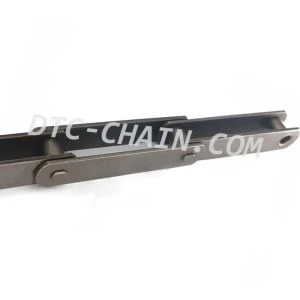
Before we discuss how pitch affects performance, it’s essential to understand what pitch is. The pitch of a conveyor chain is the distance between the centers of two consecutive pins. It is a fundamental dimension that defines the chain’s size and is typically measured in inches or millimeters. Different applications require different chain pitches, and choosing the right one is crucial for optimal conveyor system operation.
Impact on Load Capacity
One of the most significant aspects affected by the pitch of a conveyor chain is its load – carrying capacity. Generally, chains with a larger pitch have a higher load capacity. This is because larger – pitched chains have bigger links and stronger components. For example, in heavy – duty industries such as mining or steel manufacturing, where large and heavy items need to be transported, a conveyor chain with a large pitch is often preferred. The larger links can better distribute the load, reducing the stress on individual components and minimizing the risk of chain failure.
Conversely, smaller – pitched chains have a lower load capacity. They are more suitable for applications where the loads are relatively light, such as in the food and beverage industry or small – parts assembly lines. In these scenarios, a smaller – pitched chain can handle the loads effectively while also providing a smoother and more precise movement.
Effect on Speed and Acceleration
The pitch of a conveyor chain also has a direct impact on the speed and acceleration capabilities of the conveyor system. Smaller – pitched chains can typically operate at higher speeds compared to larger – pitched chains. This is because the smaller links result in a shorter distance between movement increments, allowing for a more continuous and rapid motion. In high – speed packaging lines, for instance, a conveyor chain with a small pitch can ensure that products are moved quickly and efficiently along the line.
When it comes to acceleration, smaller – pitched chains again have an advantage. They can handle sudden changes in speed more effectively due to their lighter weight and more flexible nature. Larger – pitched chains, on the other hand, may require more time and energy to accelerate and decelerate because of their heavier components and greater inertia.
However, it’s important to note that operating a chain at extremely high speeds or with rapid acceleration can increase wear and tear, regardless of the pitch. Therefore, proper lubrication and maintenance are crucial to ensure the longevity of the chain in high – speed applications.
Influence on Conveyor System Layout
The pitch of a conveyor chain can significantly influence the layout and design of the conveyor system. Smaller – pitched chains offer more flexibility in terms of system layout. They can be used in applications with tight curves and small radii because the smaller links can bend more easily. This makes them ideal for conveyor systems that need to navigate complex paths, such as in automated storage and retrieval systems or in – plant material handling systems with limited space.
Larger – pitched chains, due to their larger and more rigid links, are better suited for straight – run conveyor systems or those with large – radius curves. They are commonly used in long – distance conveyor applications, such as in bulk material handling in ports or large – scale manufacturing facilities.
Wear and Durability
The pitch of a conveyor chain also affects its wear characteristics and durability. In general, chains with a larger pitch may be more resistant to wear in some situations. The larger surface area of the links and pins in a large – pitched chain can distribute the contact forces over a wider area, reducing the local stress and wear. This is particularly beneficial in applications where the chain is subject to abrasive materials or heavy loads.
However, smaller – pitched chains can also offer good wear resistance, especially when made from high – quality materials and with proper heat – treatment. The key is to ensure that the chain is properly lubricated and maintained. In applications where frequent start – stop cycles are involved, smaller – pitched chains may actually experience less wear because they can adjust to the changes in motion more smoothly.
Noise and Vibration
The pitch of a conveyor chain can have an impact on the noise and vibration levels of the conveyor system. Smaller – pitched chains tend to produce less noise and vibration during operation. The smaller links result in a more continuous and smooth motion, which reduces the impact forces between the chain and the sprockets. This is beneficial in applications where a quiet working environment is required, such as in laboratories or office – adjacent manufacturing areas.
Larger – pitched chains, on the other hand, may generate more noise and vibration, especially when operating at high speeds or under heavy loads. The greater mass and larger contact forces between the links and sprockets can lead to more significant impacts, causing increased noise and vibration. Proper tensioning, alignment, and the use of noise – dampening materials can help mitigate these issues.
Choosing the Right Pitch for Your Application
As a conveyor chain supplier, I often encounter customers who are unsure about which pitch to choose for their specific applications. Here are some key factors to consider:
- Load Requirements: Evaluate the size and weight of the items to be transported. If the loads are heavy, a larger – pitched chain may be necessary. For lighter loads, a smaller – pitched chain can be a better option.
- Speed and Acceleration: Determine the required speed and acceleration of the conveyor system. High – speed applications usually benefit from smaller – pitched chains, while slower – moving systems with heavy loads may be better suited to larger – pitched chains.
- Conveyor System Layout: Consider the layout of the conveyor system, including the presence of curves and the available space. Smaller – pitched chains offer more flexibility for complex layouts, while larger – pitched chains are better for straight – run or large – radius curve applications.
- Environment: Take into account the operating environment, such as the presence of abrasive materials, moisture, or extreme temperatures. This can affect the wear resistance and durability of the chain, and may influence the pitch selection.
Conclusion

In conclusion, the pitch of a conveyor chain is a critical parameter that significantly impacts its performance in various aspects, including load capacity, speed and acceleration, conveyor system layout, wear and durability, and noise and vibration. As a conveyor chain supplier, I understand the importance of choosing the right pitch for each application. Our team of experts is always ready to assist you in selecting the most suitable conveyor chain based on your specific requirements.
Industrial Chains If you’re in the process of designing or upgrading a conveyor system and need help with conveyor chain selection, don’t hesitate to reach out to us. We have a wide range of high – quality conveyor chains with different pitches to meet the diverse needs of our customers. By choosing the right chain pitch, you can ensure the efficient, reliable, and long – lasting operation of your conveyor system. Contact us today to start the procurement discussion and take your conveyor system to the next level.
References
- ASME B29.1 – 2011, Roller Chains, Attachments, and Sprockets.
- ISO 606:2015, Transmission and conveyors roller chains, attachment links and sprockets.
- Neubert, H., & Roller, K. (1998). Handbook of Chain Drives. Springer – Verlag.
Hangzhou Dongteng Industrial Co., Ltd.
As one of the most professional conveyor chains manufacturers and suppliers in China, we have world-leading production equipment and strong manufacturing capabilities. Please feel free to wholesale high quality conveyor chains made in China here from our factory. Also, custom service is available.
Address: Jingdong Village, Jingjiang Town, Xiaoshan District, Hangzhou City
E-mail: cocowu@dtc-chain.com
WebSite: https://www.dtc-chains.com/
