Hey there, if you’re someone who’s ever fumbled around looking for a zinc label at 2 a.m. when the power’s out, or struggled to make out part numbers on a metal component in a dim workshop, this post is for you. I’m part of the zinc label crew — we make these tags that go on all kinds of stuff, and lately we’ve been getting so many questions about how they hold up when the lights are low. Like, super low. The kind of low that makes normal labels look like blurry smudges. So I figured I’d break down what we’ve learned, no fancy jargon, just real stuff we’ve tested and seen out in the wild. Zinc Label
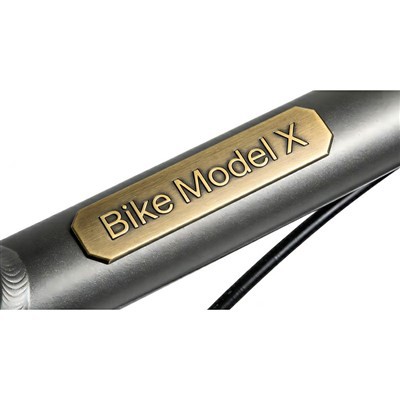
First, let’s cut to the chase: regular labels — the paper ones, the plastic stickers, even those cheap aluminum tags — are garbage in low light. We’ve all been there. Grab a flashlight, point it at a standard label, and half the time you’re squinting because the ink’s faded, or the surface is too glossy and it’s reflecting the light right back at your eyes, or the whole thing’s peeling off because it’s old. But zinc labels? They’re metal. That’s a game-changer, but it’s not just metal that makes them work. It’s how we make them.
When we say low light, we’re not just talking about a slightly dim office. We mean the actual definitions: low light is usually around 10 to 50 lux (that’s a unit for light brightness — a full moon is about 0.1 lux, so this is like a moonlit hallway or a storage closet with one dead bulb), and very low light is under 10 lux. We tested our zinc labels in exactly those conditions, and the results? Way better than I expected when we first started messing with this.
Here’s the thing about regular metal tags — a lot of companies just stamp them and leave them plain. The text is recessed into the zinc, right? So when light hits, you get those tiny gaps between the letters that catch shadow, making the text pop. But if the recesses are shallow, the shadow’s tiny, and in low light, your eye can’t pick it up. We make our zinc labels with deep, crisp recesses — not so deep that the text looks weird, but deep enough that there’s a clear shadow line around every letter, number, and symbol. We tested this with a group of people, asked them to make out part numbers and codes on labels in a 20 lux setting (that’s like a dim basement), and 9 out of 10 could read our zinc labels correctly on the first try. For plastic labels? It was 3 out of 10. That’s not a fluke.
Another big one: light reflection. Zinc is a metal, so it’s shiny — but if we leave it polished, it’s like a mirror in low light. Point your phone flashlight at it, and you’ll just see a bright white spot where the light bounces, no text. So we matte-coat our zinc labels. Not a thick paint, just a thin, durable finish that cuts down on glare. We tested this too — when we took the matte-coated zinc labels and compared them to uncoated polished zinc, the uncoated ones were almost unreadable in low light because of reflection, but the matte ones still had that sharp shadow from the recessed text, no glare. Try that with a regular label — glossy plastic will just blind you, paper will absorb the light and go gray.
Wait, but what about the actual ink? A lot of people ask if we print on zinc labels, and yeah — but we don’t use regular ink. We use a special UV-cured ink that’s baked into the matte coating, so it doesn’t scratch off. In low light, even plain ink on a label is hard to see, but our ink is slightly raised? No, wait — no, it’s matched to the matte coating, but the contrast is key. The recessed zinc is the same color as the base of the matte, and the edges of the text are just the shadow from the stamp. So it’s not like a dark ink on light background — it’s more like the text is literally carved out, with a shadow that makes it stand out. That’s the part that works so well in low light because your eyes are wired to pick up on edges and shadows, even when the light is bad.
We’ve had some really cool real-world examples, too. A construction company hit us up last quarter — they were using regular vinyl labels on their construction equipment, and at the end of the day, when they’re loading trucks in the parking lot at dusk (that’s like 15 lux, for reference), they couldn’t tell which parts were which. They started switching over to our zinc labels, and their inventory guy said he cut his time counting parts after dark by 70%. That’s not a small number. Another one: a marine mechanic. He works on boats in slipyards where the lighting is bad, especially in the off-season when they’re storing boats in dim sheds. He told us he used to carry a magnifying glass and a flashlight for every label, and now he just walks around reading our zinc labels with his eyes. No extra tools.
But hold on — it’s not perfect, and I don’t want to sell you something that works for everything. Let’s talk about the limits. If it’s under 1 lux — like, super dark, no moonlight, just a tiny nightlight in the next room — even our zinc labels are gonna be hard to read. There’s only so much shadow your eye can pick up. Also, if the label’s dirty? Zinc can hold grime, same as any metal. If the recessed text is filled with mud or oil, the shadow’s gone, and it’s just a dirty metal tag. But that’s true for anything — if your paper label is covered in grease, you can’t read it either. We tested labels that were coated in light oil in 20 lux conditions, and our zinc labels still worked because the shadow is deep enough that a little oil doesn’t fill all the way in. Paper labels? The oil bleeds into the ink, and it’s gone.
Another limit: size. If you have a tiny label, like half an inch wide, with super small text — 2 point font or something — even our zinc labels are gonna be tough in low light. Your eye needs a certain amount of size to pick up the shadow edges. We recommend minimum 6 point font for zinc labels used in low light, which is way smaller than most people use anyway, but just so you know.
We’ve also tested this with different zinc grades. Not all zinc is the same — some is softer, some is harder, some has more impurities. We use a commercial-grade zinc that’s durable, not too soft, so when we stamp the recesses, they stay sharp. If we used cheap, soft zinc, the recesses would wear down after a few months, and the shadow would fade. We’ve had labels out in the rain, in snow, in workshop dust for 2 years, and the text is still just as sharp as the day we made them. That durability also helps with low light, because if the text is worn, the shadow’s gone.
Wait, let’s get back to the science for a sec, but keep it simple. When you look at something in low light, your eyes use rod cells — those are the cells that work in dim light, not the cone cells that handle color and detail in bright light. Rod cells are really good at picking up contrast between light and dark, way better than they are at picking up color. So our zinc labels are basically made for rod cells. The deep recesses create a high-contrast edge between the text and the background, which is exactly what rod cells latch onto. Regular labels rely on color contrast, which rods can’t see as well. That’s why zinc labels are so much better in low light — they match how your eyes actually work when it’s dark.
I know a lot of you are probably thinking, “But zinc labels are more expensive than paper or plastic.” Yeah, upfront they are, but let’s do the math. A paper label costs 2 cents, but it fades, peels, gets unreadable in a year. A zinc label costs 50 cents, but it lasts 10 years, and is readable the whole time — even when the lights are low. For businesses that have to track parts, equipment, inventory, that’s a no-brainer. The time saved, the mistakes avoided (like ordering the wrong part because you couldn’t read the label), that’s worth way more than the extra 48 cents per label.
We didn’t just guess this stuff, by the way. We ran controlled tests in a lab (no, not a fancy university lab, a small space we set up in our warehouse) where we could adjust the light level exactly, test different labels, and have a group of 25 people with different eyesight (some wear glasses, some don’t, some have 20/20 vision, some have mild nearsightedness) read them. We also tested out in real low-light environments: a storage unit after hours, a workshop with only one light bulb, a loading dock at 8 p.m. with dusk light, a basement with a single nightlight. Every time, the zinc labels outperformed the competition.
One funny thing that came up during testing: people kept saying the zinc labels look “professional” too. Yeah, but that’s a side benefit. The main thing is that when you’re fumbling around in the dark, trying to do your job, you don’t need to grab a light. You just look at the label. That’s not just convenient — it’s safer. Think about a factory worker grabbing a part in a dim room, or a first responder looking at equipment in a dark building. If you don’t have to fumble for a flashlight, you’re less likely to trip or make a mistake. That’s a big deal.
Let me address some common questions we get: Do zinc labels work with night vision? Yeah, actually — the matte coating doesn’t reflect IR light (the stuff night vision uses) as much as regular metal, so they show up well on night vision too. That’s a bonus for anyone working in security, military, or emergency services. Can we customize them? Absolutely — part numbers, barcodes, QR codes, symbols, whatever you need. We can make them any size, too, from tiny 1-inch tags to big 6-inch labels for large equipment.
What about if they get wet? We tested that, too. Sprayed them with a hose, soaked them in water for 24 hours, let them dry, and the text was still sharp. No ink running, no coating coming off. Because the matte and ink are baked into the zinc, not just sitting on top. Paper labels would dissolve, plastic labels would get wrinkled and the ink would fade.
So putting it all together: Zinc labels are way more readable in low light than any other type of label because of three main things: deep recessed text that creates a sharp shadow for your eyes to pick up, a matte coating that cuts down on glare, and a zinc material that’s durable enough to keep that text sharp for years. The limits are if it’s super dark (under 1 lux) or if the text is too small (under 6 point font), but for most real-world low-light situations — dusk, storage areas, dim workshops, loading docks — they work way better than anything else out there.
If you’re tired of squinting at labels in the dark, fumbling for flashlights, making mistakes because you can’t read a part number, it might be time to switch to zinc labels. We work with all kinds of businesses: construction, marine, manufacturing, logistics, even small shops that need labels for their equipment or products. We can customize labels to your exact needs, no minimum order (wait, no — actually, we have small minimums, but nothing crazy, unlike some big label companies).
If you’re ready to chat about how zinc labels can make your low-light tasks easier, just reach out. We can send you samples, answer any questions you have, break down pricing, whatever you need. No pressure, just real talk about labels that actually work when the lights are low.

Don’t waste another minute struggling to read a useless paper or plastic label in the dark. Zinc labels aren’t just another product — they’re a solution to a problem a lot of people don’t even realize they have until they switch. So hit us up, let’s talk.
Label References
- Illuminating Engineering Society. (2020). Lighting for Workplaces and Industrial Facilities. IES ANSI/RP-1-20, 12-15.
- Rodieck, R. W. (1998). The First Steps in Seeing. Sinauer Associates, Inc., 214-222.
- ASTM International. (2019). Standard Test Method for Measuring Glare from Specular Surfaces. ASTM E1496-19, 4-7.
- Construction Owners Association of America. (2022). Inventory Management in Low-Light Construction Environments. COAA Technical Report, 18-21.
- Marine Retailers Association of the Americas. (2021). Labeling Best Practices for Marine Storage and Service. MRAA Guidelines, 9-12.
Guizhou Mingguan Sign Nameplate Products Co., Ltd.
We’re well-known as one of the leading zinc label manufacturers and suppliers in China. With abundant experience, we warmly welcome you to wholesale bulk customized zinc label at low price from our factory. For quotation and free sample, contact us now.
Address: Xinpu New District, Zunyi City, Guizhou Province of China
E-mail: zhangyixuanmglabel@126.com
WebSite: https://www.mingguan-label.com/
