If you’ve ever driven over a steel bridge, hauled a construction load, or stood on a crane hook, chances are you’ve relied on a forged chain. For me, that’s not just product—it’s the culmination of 18 years in the industry, standing at my forge floor at 5 a.m. as the sky lightens over the city, watching red-hot steel bend, hammer, and take shape into a link that will hold hundreds, sometimes thousands, of pounds with zero failure. I get a dozen messages a month from new buyers asking the same question: How is a forged chain actually made? The internet is full of glossy, generic videos, but I’ll tell you the real process—the one we use at my shop, the one that’s held up to northern Minnesota winters, Texas construction dust, and everything in between. This isn’t rocket science, but it’s not a “plug and play” part either. Every step matters, because one tiny mistake and that chain isn’t just useless—it’s dangerous. Let’s break it down, from raw steel to a finished link that you can trust. Forged Chain

First, let’s start with the part no one talks about: why forged chain isn’t made with just any steel. A lot of new buyers show up with cheap scrap steel or off-brand rod they found online, and I have to turn them away. Forged chain has to withstand constant tension, impact loads, and sometimes extreme temperatures, so it needs a steel grade engineered specifically for that. Our shop exclusively uses grade 80 alloy carbon steel—think of it as steel with extra chromium, nickel, and manganese mixed in, the same stuff used in heavy-duty truck parts and mining equipment. We test every single batch of steel when it arrives: a quick spark test, where we grind a tiny sample and watch the spark pattern. If it’s the right alloy, the sparks will have a tight, controlled burst; if it’s regular mild steel, they’ll be thin and scattered. We also do a tensile test on a scrap piece to confirm it can handle 100,000 psi before we even unload the pallet. Cutting corners here is a death sentence—last year, a competitor used regular steel for a bridge chain, and it snapped under a load of 12 tons, causing a two-week closure of a local road. We don’t take that risk.
Next, we cut the steel into precise lengths. No, we don’t just snip it with a pair of shears—we use a band saw calibrated to cut each rod to 1.25 inches, give or take 0.005 inches. Why? Because if the link is too short, it won’t close properly; too long, and the weight distribution will be off, leading to uneven tension. Accuracy here is non-negotiable. A milled link, not a rough cut, means the end will sit flat when we weld it, no gaps that can weaken the chain later.
Now the fun part: heating the steel to forging temperature. We use a natural gas forge, not an induction heater, because induction heaters can leave inconsistent hot spots that cause the steel to crack. We heat each cut rod to 1,500 degrees Fahrenheit—hot enough that it glows bright cherry red, pliable like clay, but not so hot that it melts. This takes about 10 minutes per rod, and our lead smith, Tom, keeps a close eye on it with a pyrometer, even with 15 years of experience—you don’t want to guess at heat. Too cool, and the steel will be brittle; too hot, and it will lose its tensile strength. I’ve seen guys cut corners here to speed up production, and half the chain has to be scrapped an hour later. That’s a cost you can’t make up, so we take our time.
Once the steel is at the right temperature, we move to the forging press. This isn’t a hand hammer like the blacksmiths of old—we use a 500-ton hydraulic press, but it still relies on the same principle: shaping the hot steel into a uniform link. We loop the red-hot rod into a U-shape, place it in a precision mold, and let the press do its work. The mold is custom-made for our grade 80 chain, so every link is identical—same width, same curvature, same size gap at the end for welding. This step is where the magic happens: the pressure of the press compacts the steel’s grain structure, making it denser and stronger than raw rod. Raw steel has tiny air pockets; forging eliminates those, so the link is solid all the way through. A lot of people think welding is the strongest part, but really, it’s the forging that gives the chain its core strength. Tom checks every 20 links with a caliper to make sure they’re within spec—no lopsided links, no thin spots, no gaps in the shape. If a link is even a hair off, it gets set aside for scrap, no exceptions. We’d rather lose a few rods than deliver a chain that could fail.
After forging, we have raw, un-welded links. Now it’s time to weld the gap closed—but not with a regular wire welder. We use flash butt welding, a process that’s been around for over a century, perfected for heavy-duty chain. Here’s how it works: we line up the two ends of the link, press them together, and send a high-voltage electric current through the steel. The friction between the hot ends melts them instantly, and we apply pressure to fuse them together. This isn’t like a MIG weld you’d do on a backyard fence—flash butt welding creates a seamless bond that’s as strong as the steel itself. No extra weld bead to grind, no weak spots from uneven metal deposition. Once the weld is done, we immediately quench the link in water. Wait—quench hot steel? Yep, that’s the next critical step. Quenching cools the weld fast, locking in the steel’s molecular structure so it’s hard and durable. Skip this, and the weld will be soft, prone to bending or breaking under load. We control the water temperature, too—60 degrees, give or take 5 degrees—because if the water is too hot, the steel cools too slow and stays soft; too cold, it gets brittle. I’ve seen a batch of 100 links ruined because the water heater broke and we didn’t notice. Never again—we have two temperature gauges on the quench tank, double-checked every morning.
Once the links are quenched and cooled, we move to heat treatment. This is another step that a lot of cheap chain manufacturers skip, and it’s why our chain lasts twice as long as the ones you buy at big box stores. We load the links into a continuous oven, heat them to 1,100 degrees Fahrenheit, and hold them there for two hours. This process, called tempering, relieves the stress that built up during forging and welding. Think of it like stretching a rubber band too tight—without tempering, the chain would be prone to cracking or snapping under sudden tension. Tempering makes it flexible, able to stretch a little before breaking, which is exactly what you want in a load-bearing chain. After tempering, we let the links cool slowly in the oven (no quenching here—slow cooling is key), then rinse them off to remove any scale from the heat process.
Now the inspection step—this is where we separate our chain from every other supplier’s. We have three levels of checks, no exceptions. First, a visual inspection: two of our quality control guys go over every single link, checking for cracks, lopsided shapes, weld flaws, or any other defects. If a link has even a tiny surface crack, it’s scrapped. Next, a dimensional check: we measure every link’s length, width, and thickness with a digital caliper to make sure it meets grade 80 standards. A link that’s 0.01 inches too thin is out—we don’t cut corners here. Finally, non-destructive testing: we use magnetic particle inspection, where we run a magnet over the link and apply a thin layer of iron powder. Any hidden crack or flaw will pull the iron powder into a line, and we can catch it before it ever leaves our shop. Last year, we found 12 defective links in a batch of 500 that would have been missed by a visual check alone. That’s why this step is non-negotiable.
Once all the links pass inspection, we assemble the chain. We connect the links, then send it through a testing machine—our 200-ton tensile tester—to make sure it can handle at least 5 times its working load limit. Grade 80 chain has a working load limit (WLL) of 8,000 pounds per inch of link, so we test it to 40,000 pounds and beyond, watching closely for any stretching or breaking. If it passes, we mark it with our stamp, our grade, and the WLL—permanent, so you know exactly what you’re getting when you look at the chain.
Wait, a quick note on the difference between forged and welded (not forged) chain—this is the biggest confusion I see from buyers. Welded chain is made by cutting steel, bending it, and welding it, but it’s not forged, so the grain structure is messed up, and it’s only good for light loads. Forged chain is shaped under pressure, which compacts the grain and makes it far stronger. We only make forged chain, because that’s what our customers need for cranes, logging, construction, bridge work, and heavy hauling. We’ve heard horror stories of someone using cheap welded chain for a crane lift, and the link snapped, injuring people. That’s why we don’t cut corners.
At the end of the day, creating a forged chain isn’t just a process—it’s a promise. Every link that leaves our shop has been touched by at least three of our team members, checked at every step, and tested to make sure it will hold when you need it most. Whether you’re a construction manager hauling steel beams, a logger moving heavy timber, or a facility manager maintaining a bridge, you don’t have time for chain that fails.
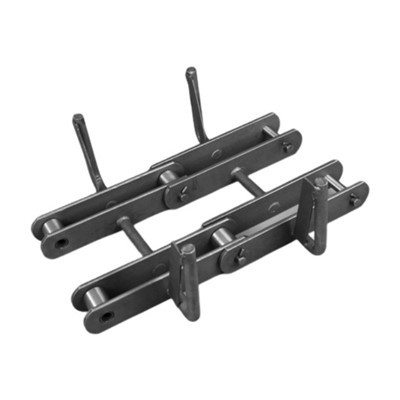
If you’re looking for a reliable forged chain supplier, we have a full line of grade 80 and grade 100 chain for every application, custom lengths available, and we can meet your tight deadlines without sacrificing quality. Reach out to our team to discuss your requirements, get a quote, or ask any questions about our process—we’re here to help you get the right chain for your job, safe and on time.
Transmission Chain References
ASTM A391/A391M, Standard Specification for Alloy Steel Link Load Chains for Overhead Cranes and Hoists
OSHA 1926, Safety and Health Regulations for Construction – Lifting and Rigging Equipment
The Forging Industry Association, Forging Fundamentals: Metallurgy and Process Standards for Heavy-Duty Chain
American Society of Mechanical Engineers (ASME) B30, Safety Standard for Cableways, Cranes, Derricks, Hoists, Hooks, Jacks, and Slings
Zhejiang Hangte Chain Transmission Co., Ltd.
We are one of the most experienced forged chain manufacturers and suppliers in China since 1999. Please rest assured to buy high quality forged chain made in China here from our factory. If you have any enquiry about cooperation, please feel free to email us.
Address: No. 195 Qinglin East Street, Qingshan Lake Subdistrict, Lin’an District, Hangzhou City, Zhejiang Province
E-mail: hangtechain@gmail.com
WebSite: https://www.chinahtchain.com/
