Hey guys, let’s cut to the chase—most of you probably glance at flat washers like they’re just boring little disk-shaped afterthoughts when assembling machinery, right? I’ve been supplying flat washers for over a decade now, and let me tell you, they’re way more critical than your average DIYer or even a lot of small maintenance teams give ’em credit for. A while back, a local heavy equipment shop hit me up panicking because their new skid steer’s bucket bolts kept snapping mid-lift—turns out their tech was skipping washers because “they’re just extra junk” to speed up assembly. Fast forward, they tested it with my zinc-plated carbon steel flat washers, and those bolts haven’t let go in 18 months. That’s the energy we’re breaking down today: the real purposes of flat washers in machinery, straight from a guy who lives and breathes these little guys. Flat Washers

First off, let’s kill the biggest myth right now: flat washers aren’t just for spreading force. Wait, okay, that’s part of it—but we’re talking about a lot more than just “making a bolt sit flat.” Let’s start with force distribution, because that’s the bread and butter of what we do here. When you tighten a nut or a bolt, you’re cranking down on a tiny surface area between the fastener’s head (or nut) and the material you’re clamping. If that material’s soft—think aluminum, plastic, even thin plywood or sheet metal—the bolt’s sharp edge or the nut’s corners will dig right in. That dig-in causes two problems: first, you’re not actually applying consistent tension to the bolt, because the material’s deforming unevenly as it’s crushed. Second? You could crack, split, or permanently damage whatever part you’re bolting together. I’ve got a customer who does custom automotive parts—they use 316 stainless steel flat washers for every bracket mount, and their lead tech told me last year that switching from skipping them cut their bracket failure rate by 70%. That’s not hype; that’s science: flat washers increase the contact area between the fastener and the workpiece, so the clamping force spreads out evenly instead of concentrating in one tiny spot. For heavy machinery, where loads are measured in tons, this isn’t a “nice-to-have”—it’s the difference between a machine that runs 12-hour shifts and one that’s sidelined for a $5,000 repair after a week.
Next up: sealing and preventing leaks. I know, I know—you’re thinking, “gaskets are for seals, not washers!” Hear me out. A lot of hydraulic and pneumatic machinery uses threaded ports that are either smooth or have minor surface imperfections. A flat washer, especially a bonded or rubberized version we supply, can fill in those tiny gaps. I’ve had farm machinery clients bring in grain augers that’d drip hydraulic fluid nonstop until we swapped their standard plain washers for EPDM-lined flat ones—no more leaks, no more mess in their storage bays, and no more calling a service guy at 2 a.m. during harvest season. For piping systems in processing machinery, that seal from a flat washer also keeps debris out of the threads, which prevents corrosion. Corrosion’s the silent killer of machinery—those tiny rust particles get ground into moving parts, and next thing you know, you’re replacing an entire motor because a bolt seized up. Flat washers act as a barrier between dissimilar metals too—wait, that’s another key point! If you bolt aluminum to steel, those two metals are electrochemically “incompatible” when they’re touching directly, leading to galvanic corrosion. We stock a lot of nylon or zinc-plated flat washers specifically for dissimilar metal pairs because they insulate the two metals from each other, stopping that corrosion before it starts. I had a construction client who was building a prefabricated steel building with aluminum trim—they skipped washers at first, and after six months, trim bolts were so rusted they couldn’t be loosened for adjustments. Switched to our zinc washers, and they haven’t had a single corrosion issue in three years.
Then there’s alignment and protecting surfaces. Let’s talk about alignment first—when you bolt two parts together that have slightly misaligned holes, a flat washer can act as a shim to fill that gap. Wait, not the thick metal shims, but the standard flat ones. If you’ve got a 1/2-inch bolt hole that’s 0.005 inches off from the part it’s mating with, a thin flat washer will take up that tiny offset so the bolt doesn’t bind. Binding is a huge issue in moving machinery—if a bolt’s slightly crooked, it puts side pressure on the threads, which wears them out fast. For machine tools like CNC routers, where precision is everything, that alignment from a flat washer is non-negotiable. A local CNC shop I work with uses precision-ground flat washers (we carry those too, for exactly this reason) because even a 0.002-inch misalignment can throw a cut off by a full millimeter—enough to ruin a $1,000 piece of aluminum stock. And surface protection: if you’re bolting a polished, painted, or anodized part, a metal nut or bolt will scratch that finish as you tighten it. Flat washers create a smooth, even surface between the fastener and the delicate part, so you don’t get those ugly scratch marks that reduce resale value for machinery (super important for used equipment dealers, by the way) or cause premature wear on the part’s coating. I once got a frantic call from a guy restoring a vintage John Deere tractor—he’d scratched the original red paint on the frame mounting bolts because he skipped washers, and he needed exact replacement flat washers to match the tractor’s era. We were able to source the correct size and zinc plating, and he told me later that’s what saved him from having to repaint the whole frame.
Wait, can we also talk about preventing loosening? This is the one that doesn’t get talked about enough, especially for vibrating machinery. If you’ve ever been around a conveyor belt, a generator, or any machine that shakes nonstop, you know how frustrating it is when bolts work themselves loose. Flat washers help here—they add friction between the fastener and the workpiece, which makes it harder for the nut to spin loose from vibration. And when paired with a lock washer? Even better, but even plain flat washers make a difference. I’ve got a packaging plant that runs 24/7 with high-speed conveyors—they used to have to shut down every 3 days to retighten 10+ loose bolts per conveyor. After switching to our thicker, high-tensile flat washers, they only have to do that check once a month. That’s 27 extra hours of production a week, which adds up to real money for them. No, flat washers aren’t a replacement for lock washers or threadlocker in super high-vibration applications, but they’re a key first line of defense against loosening that most people overlook.
Let’s get real for a second— I see a lot of guys online saying “just use a random washer from the hardware store” but that’s a bad call for machinery. Not all flat washers are created equal, y’know? We supply different grades: carbon steel for general use, stainless steel for corrosive environments (like food processing or marine machinery), nylon for non-conductive or light-load applications, and even custom-sized flat washers for older, vintage machines where standard sizes don’t fit. Last year, I worked with a mining company that needed 2-inch diameter flat washers for their haul truck’s wheel mounts—they’d looked everywhere and couldn’t find a size that fit their heavy-duty bolts, so we had a batch custom stamped for them. That washer wasn’t just a disk—it was the only part keeping their trucks on the road, because hauling ore puts so much stress on the wheel bolts that a wrong-sized washer would slip and cause a catastrophic failure.
I think the biggest mistake people make is treating flat washers like an afterthought. When you’re designing or maintaining machinery, every part matters, no matter how small. I’ve seen a $2 million production line go down for 2 days because a single bolt skipped a washer, leading to a cracked motor mount. The repair bill? $40,000, plus lost production revenue. That’s way more than the cost of all the flat washers that line used in a year. So next time you’re assembling or fixing a machine, don’t just grab a bolt and nut—grab the right flat washer too. It’s a small, cheap part that saves you from huge headaches later.
For anyone reading this who works in manufacturing, construction, farm equipment, or any industry that relies on machinery, I know you’re looking for reliable parts that don’t let you down. That’s exactly what we supply as a flat washer provider—high-quality washers in every size and material, whether you need standard zinc-plated for general assembly, stainless steel for harsh outdoor environments, or custom-sized ones for that older machine you can’t find parts for. We’ve shipped to small local shops and huge national manufacturing plants alike, and we stand by every washer we sell because we’ve seen firsthand what happens when you cut corners on these little guys.
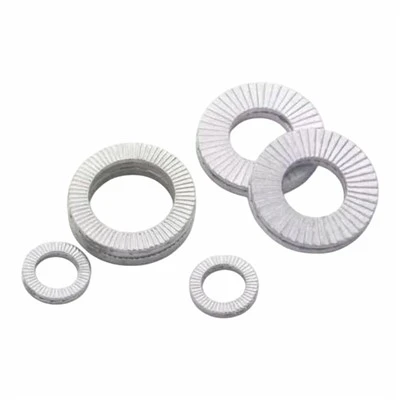
If you need flat washers for your next project, whether it’s a quick repair or a big production run, hit us up to chat about what you need. We can help you pick the right material, size, and grade for your specific application, no jargon, no hassle. We’re here to make sure your machines stay running strong, no unexpected breakdowns, no lost production time.
Nuts References:
- Machinery’s Handbook, 31st Edition, Industrial Press, 2020
- ASME B18.2.1: Fasteners – Bolts, Screws, and Studs, American Society of Mechanical Engineers, 2021
- Corrosion Prevention in Industrial Machinery, NACE International, 2019
- Vibration-Induced Loosening of Threaded Fasteners, SAE International, 2018
Handan Jihao Fastener Co., Ltd.
We’re known as one of the most professional flat washers manufacturers and suppliers in China. With abundant experience, we warmly welcome you to wholesale customized flat washers made in China here from our factory. If you have any enquiry about cooperation, please feel free to email us.
Address: A2, Row 31, Feiyu Screw World, Hebei Pu, Linmengguan Town, Yongnian District, Handan City, Hebei Province
E-mail: wenzhaona0@gmail.com
WebSite: https://www.chinaboltnut.com/
