In the dynamic landscape of industrial automation, collaborative robots, commonly known as cobots, have emerged as a transformative force. These robots work side – by – side with human operators, enhancing productivity, precision, and safety in various manufacturing and service settings. One of the critical elements that define the functionality and adaptability of cobots is the programming languages used to control them. As a leading collaborative robot supplier, I am excited to delve into the programming languages that power these remarkable machines. Collaborative Robot

1. Python
Python has become a staple in the world of cobot programming, and for good reason. Its simplicity, readability, and vast community support make it an ideal choice for both beginners and experienced developers.
Ease of Learning and Use
Python’s syntax is straightforward and resembles plain English, which significantly reduces the learning curve. This is particularly beneficial for human operators who may need to program cobots on – the – fly. For example, a factory worker can quickly pick up basic Python commands to teach a cobot to perform simple pick – and – place tasks.
Rich Library Ecosystem
Python boasts an extensive collection of libraries that are highly relevant to cobot programming. Libraries such as NumPy and SciPy provide powerful numerical computing capabilities, which are essential for tasks like motion planning and kinematics calculations. Additionally, the OpenCV library can be used for vision – based applications, enabling cobots to recognize objects and navigate their environment.
Integration with Other Technologies
Python can easily integrate with other software and hardware systems. It can communicate with sensors, actuators, and other industrial devices through protocols like ROS (Robot Operating System). ROS is a popular middleware framework in the robotics community, and Python’s compatibility with it allows for seamless development of complex cobot applications.
2. RAPID
RAPID is the proprietary programming language developed by ABB, one of the major players in the cobot market. It is specifically designed for programming ABB’s industrial and collaborative robots.
Robot – Centric Design
RAPID is tailored to the unique requirements of ABB cobots. It provides a high – level interface that allows programmers to control the robot’s movements, I/O signals, and other functions with ease. For example, programmers can use RAPID to define the robot’s path, speed, and acceleration, ensuring smooth and precise operation.
Safety – Oriented Features
Safety is a top priority in collaborative robotics, and RAPID incorporates several safety – oriented features. It allows for the implementation of safety functions such as speed and separation monitoring, which ensure that the cobot operates safely in close proximity to human workers.
Off – line Programming
RAPID supports off – line programming, which means that programmers can develop and test robot programs on a computer without the need for the physical robot. This reduces downtime and allows for more efficient programming and debugging processes.
3. Karel
Karel is the native programming language for Fanuc robots, another well – known brand in the cobot industry. It is named after Karel Čapek, the Czech writer who first introduced the term "robot" in his 1920 play "R.U.R."
Structured Programming Approach
Karel follows a structured programming approach, which emphasizes modularity and readability. Programs are divided into sub – routines, making it easier to manage and maintain complex code. This is especially useful for large – scale cobot applications where multiple tasks need to be coordinated.
Real – Time Performance
Karel is designed to provide real – time performance, which is crucial for cobots that need to respond quickly to changing environmental conditions. It can handle high – speed motion control and precise timing requirements, ensuring that the cobot operates with high accuracy.
Compatibility with Fanuc Systems
As Fanuc’s native language, Karel is fully integrated with Fanuc’s robot controllers and software. This ensures seamless communication between the programming interface and the cobot, resulting in reliable and efficient operation.
4. LUA
LUA is a lightweight, high – performance scripting language that has gained popularity in the cobot programming community.
Low Memory Footprint
LUA has a very low memory footprint, which makes it suitable for use in embedded systems, including cobot controllers. This is especially important for cobots with limited computing resources, as it allows for efficient use of system memory.
Quick Execution
LUA is known for its quick execution speed. It can be used to implement real – time control algorithms, such as those required for force feedback and compliant motion control. This enables cobots to interact with objects and humans in a more natural and precise way.
Embeddable in Other Languages
LUA can be easily embedded in other programming languages, such as C and C++. This allows for the creation of hybrid systems where LUA is used for scripting and control, while the underlying systems are developed in more traditional programming languages.
5. MATLAB
MATLAB is a powerful programming environment widely used in engineering and scientific research. It also has significant applications in cobot programming.
Mathematical Modeling and Simulation
MATLAB provides a comprehensive set of tools for mathematical modeling and simulation. Programmers can use MATLAB to develop and test kinematic and dynamic models of cobots, allowing them to optimize the robot’s performance before deployment.
Algorithm Development
MATLAB is ideal for developing advanced control algorithms, such as PID (Proportional – Integral – Derivative) controllers and adaptive control algorithms. These algorithms can be used to improve the cobot’s accuracy, stability, and responsiveness.
Visualization
MATLAB offers excellent visualization capabilities, which are useful for debugging and monitoring cobot operations. Programmers can create 3D models of the cobot and its environment, and visualize the robot’s movements and sensor data in real – time.
Choosing the Right Programming Language
When selecting a programming language for a cobot application, several factors need to be considered.
Robot Brand and Compatibility
The first factor is the brand of the cobot. As mentioned earlier, some programming languages are specific to certain robot manufacturers. For example, if you are using an ABB cobot, RAPID would be the natural choice. However, if you want more flexibility and cross – compatibility, languages like Python can be a better option.
Application Requirements
The nature of the application also plays a crucial role in language selection. For simple pick – and – place tasks, a high – level language like Python may be sufficient. However, for complex tasks that require real – time performance and precise motion control, languages like Karel or RAPID may be more appropriate.
Skill Level of the Programming Team
The skill level of the programming team is another important consideration. If the team has extensive experience in a particular programming language, it may be more efficient to use that language. However, if the goal is to upskill the team, a more versatile and widely – used language like Python can be a good investment.
Our Collaborative Robots and Programming Languages
As a collaborative robot supplier, we understand the importance of providing our customers with flexibility and compatibility in programming. Our cobots are designed to support multiple programming languages, including Python, LUA, and MATLAB. This allows our customers to choose the language that best suits their needs and expertise.
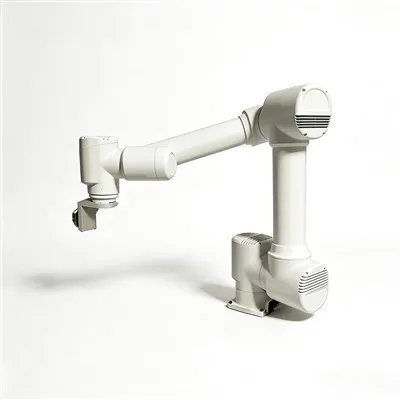
We also offer comprehensive training and support services to help our customers get the most out of their cobots. Our team of experts can assist with language selection, program development, and troubleshooting, ensuring a smooth and successful implementation.
Collaborative Palletizing Robot If you are interested in exploring the capabilities of our collaborative robots and learning more about the programming languages we support, we invite you to reach out to us. Whether you are a small – scale manufacturer looking to automate a single process or a large – scale enterprise in need of a comprehensive automation solution, our cobots can provide the efficiency and flexibility you require. Don’t hesitate to contact us for more information and to start the procurement process. We look forward to collaborating with you to achieve your automation goals.
References
- Thrun, S., Burgard, W., & Fox, D. (2005). Probabilistic Robotics. MIT Press.
- LaValle, S. M. (2006). Planning Algorithms. Cambridge University Press.
- Cowley, A. (2019). "A Review of Programming Languages for Collaborative Robotics". Journal of Robotics and Automation.
Xinweilai Intelligent Technology (Shandong) Co., Ltd.
As one of the most professional collaborative robot manufacturers and suppliers in China, we’re featured by quality products and good service. Please rest assured to wholesale bulk customized collaborative robot from our factory. For pricelist and quotation, contact us now.
Address: Jinghua Road, Economic and Technical Development Zone, Dezhou City, Shandong Province
E-mail: liujiqing@xinweilaiznkj.com
WebSite: https://www.xinweilaiznkj.com/
