The selection of appropriate cable lugs is crucial in electrical installations, significantly influencing the performance and reliability of the system. As a supplier of copper cable lugs with years of experience, I’ve witnessed firsthand the importance of understanding the differences between copper cable lugs for various cable types. In this article, we’ll delve into these differences, exploring how cable characteristics, application requirements, and industry standards shape the design and selection of copper cable lugs. Copper Cable Lug
1. Cable Material and Its Influence on Cable Lug Selection
Cables are primarily made from copper or aluminum, and the material of the cable greatly affects the choice of cable lugs.
1.1 Copper Cables and Their Lugs
Copper cables are widely used due to their excellent electrical conductivity, corrosion resistance, and flexibility. When it comes to copper cable lugs for copper cables, the compatibility is straightforward. Copper-to-copper connections are ideal because they share similar electrical and thermal properties. This compatibility reduces the risk of galvanic corrosion, which occurs when two dissimilar metals are in contact in the presence of an electrolyte.
Copper cable lugs for copper cables are often made from high – purity copper, such as electrolytic copper. The high purity ensures low resistance, which is essential for minimizing power loss and heat generation. For example, in a high – current electrical circuit like the power supply for a large industrial motor, using a high – quality copper lug on a copper cable ensures efficient power transmission.
1.2 Aluminum Cables and Specialized Lugs
Aluminum cables are a more cost – effective alternative to copper cables, especially for long – distance power transmission. However, they present unique challenges when connecting with cable lugs. Aluminum is more prone to oxidation, and its surface forms a thin, resistive oxide layer that can increase the contact resistance.
To address this issue, special copper cable lugs for aluminum cables are designed. Some copper lugs are tinned to prevent direct contact between the copper and aluminum, reducing the potential for galvanic corrosion. Additionally, the lugs may have a larger contact area to compensate for the lower conductivity of aluminum compared to copper. For instance, in a utility power distribution system where aluminum cables are used extensively, these specialized lugs are crucial for maintaining a stable electrical connection.
2. Cable Size and Lug Requirements
Cable size, typically measured by its cross – sectional area, is another critical factor in determining the appropriate copper cable lug.
2.1 Small – Gauge Cables
Small – gauge cables are commonly used in low – power applications such as control circuits, telecommunications, and electronic devices. For these cables, the corresponding copper cable lugs are relatively small and have a lower current – carrying capacity.
The design of lugs for small – gauge cables often focuses on flexibility and ease of installation. They may have a smaller diameter and a more delicate construction. For example, in a printed circuit board installation, small copper cable lugs with a compact design are used to connect the cables to the board without taking up too much space.
2.2 Large – Gauge Cables
Large – gauge cables are used in high – power applications, including power generation, distribution, and heavy industrial machinery. These cables require lugs that can handle high currents and provide a secure connection.
Copper cable lugs for large – gauge cables are larger in size and have a greater cross – sectional area. They are often made from thick copper to ensure sufficient current – carrying capacity. Additionally, they may have reinforcement features such as extra – thick walls or flanges to prevent deformation under high mechanical stress. In a power station, for example, large – gauge cables are connected to transformers and switchgear using robust copper cable lugs to ensure reliable power transfer.
3. Cable Type and Application – Specific Requirements
Different cable types are designed for specific applications, and the associated copper cable lugs need to meet these requirements.
3.1 Flexible Cables
Flexible cables are commonly used in applications where frequent movement or bending is required, such as in robotic arms, portable electrical equipment, and movable power distribution systems. Copper cable lugs for flexible cables are designed to maintain a stable connection even under repeated bending and movement.
These lugs often have a more flexible or curved design to follow the movement of the cable. They may also be made from a more malleable form of copper to prevent breakage. For example, in a stage lighting system where the cables need to be adjusted frequently, flexible copper cable lugs ensure reliable electrical connection.
3.2 Armored Cables
Armored cables are used in harsh environments where the cable needs protection from physical damage, such as in underground installations, industrial areas, or areas prone to mechanical impact. Copper cable lugs for armored cables need to be compatible with the cable’s armor.
Some lugs are designed to be attached to the armor, providing additional mechanical support. Others may have a special sealing mechanism to prevent moisture and dust from entering the connection, which is crucial for maintaining the integrity of the electrical system. In a mining environment, where the cables are exposed to extreme conditions, properly designed copper cable lugs for armored cables are essential.
4. Industry Standards and Certification
The electrical industry is highly regulated, and copper cable lugs must meet various standards and certifications.
4.1 International Standards
Standards such as IEC (International Electrotechnical Commission) and UL (Underwriters Laboratories) set requirements for the design, performance, and safety of copper cable lugs. These standards cover aspects such as electrical conductivity, mechanical strength, corrosion resistance, and temperature rating.
Cable lugs that meet international standards are more likely to provide reliable performance in different applications. For example, an IEC – compliant copper cable lug ensures that it can be used in a wide range of electrical systems around the world, providing a certain level of quality and safety assurance.
4.2 National and Regional Standards
In addition to international standards, many countries and regions have their own specific standards for copper cable lugs. These standards may take into account local environmental conditions, electrical grid requirements, and safety regulations.
For instance, in some countries with a high humidity climate, cable lugs may need to meet more stringent corrosion – resistance requirements. It is essential for us as a copper cable lug supplier to ensure that our products meet all relevant national and regional standards to serve our customers effectively.
5. Conclusion and Call to Action
As we’ve seen, there are significant differences between copper cable lugs for different cable types. These differences are driven by cable material, size, type, application requirements, and industry standards. Choosing the right copper cable lug is crucial for ensuring the performance, safety, and reliability of electrical systems.
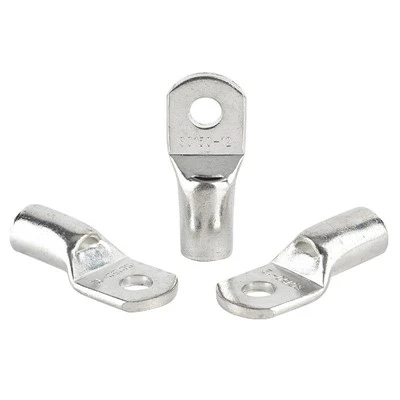
At our company, we are committed to providing high – quality copper cable lugs that meet the diverse needs of our customers. Our extensive product range includes lugs for different cable materials, sizes, and applications. We rigorously test our products to ensure they comply with international and national standards.
Cable Lug If you’re in need of copper cable lugs for your electrical projects, we invite you to contact us for a detailed consultation. Our experienced team can help you select the most suitable lugs for your specific requirements. Whether you’re working on a small – scale electronic project or a large – scale industrial installation, we have the right solution for you. Let’s work together to ensure the success of your electrical systems.
References
- IEC 61238 – 1:2016, Connectors for power cables with rated voltages above 1 kV up to and including 30 kV – Part 1: Prefabricated connectors for insulated cables and their accessories.
- UL 486A – 486B, Safety for Wire Connectors and Materials for Terminals, Lugs, and Inserts.
- ANSI/NEMA WC 81 – 2002, Standard for Compression and Mechanical Connectors for Aluminum and Copper Conductors.
Wenzhou Lanen Electrical Co., Ltd.
Wenzhou Lanen Electrical Co., Ltd. is one of the most professional copper cable lug manufacturers and suppliers in China, also supports customized service with low price. Please feel free to buy CE approved copper cable lug made in China here from our factory. Contact us for more discount information.
Address: Zhiguang Liushi Town Yueqing City Wenzhou City Zhejiang Province
E-mail: lanen@luyele.cn
WebSite: https://www.lanenelectrical.com/
