Hey there, if you’ve ever shopped for dental titanium round discs—whether you’re a dentist, lab tech, or someone in the dental supply game—you’ve probably wondered: “Are these things just plain old titanium, or are there different alloys out there?” Spoiler alert: It’s way more than just basic Ti. As a dental titanium round discs supplier, I field this question all the time—so let’s break it down like we’re chatting in the supply warehouse break room, no stuffy lab jargon that makes your eyes glaze over. Dental Titanium Round Discs

First, let’s get one thing straight: Titanium is the gold standard for dental stuff (pun very intended) because it’s lightweight, super strong, and basically doesn’t corrode in your mouth. But pure titanium (that’s Ti grade 1, if you wanna get technical) is great for certain things—like some clear aligner buttons or small abutments—but it’s not perfect for every dental job. That’s where alloys come in. Alloys are just mixing titanium with tiny bits of other metals (like aluminum, vanadium, or niobium) to tweak its properties. Think of it like making chocolate: plain cocoa is great, but adding a little butter or sugar makes it way better for specific treats.
Now, let’s talk about the most common alloys we supply as a dental titanium round discs supplier. First up, Ti-6Al-4V—shoutout to the big dog. That’s titanium mixed with 6% aluminum and 4% vanadium. This is the workhorse, right? It’s way stronger than pure Ti, so it’s perfect for big, heavy-duty parts like dental implants (the whole root that goes into your jawbone) or full bridges that need to hold up for years. Wait, but there’s Ti-6Al-4V ELI—ELI stands for “extra low interstitials,” which just means it has way less oxygen and nitrogen. Why does that matter? Lower interstitials make it more flexible, so it’s better for things where you don’t want a rigid part snapping under pressure—like smaller abutments or custom frameworks. I tell our customers all the time: if you’re building an implant that needs to bend a little with the jaw, go ELI. If it’s a super solid bridge that won’t move, standard Ti-6Al-4V works like a charm.
Next up, there’s the newer kid on the block: Ti-Zr alloys, like Ti-15Zr. Zr is zirconium, which is a metal that’s super biocompatible (basically, your body doesn’t care about it at all). We’ve been supplying more of these lately because a lot of patients and dentists are nervous about aluminum and vanadium—even though the amounts in Ti-6Al-4V are tiny and FDA-approved, Ti-Zr feels like a “cleaner” option to some. It’s still strong, but it’s more aesthetic too? Wait, kind of. Zr gives the disc a slightly whiter tone, so when you mill a abutment that sits right under the gum line, it’s less likely to look gray through the gum than Ti-6Al-4V. That’s a big win for cosmetic dentistry, where appearances matter as much as function. We had a customer last month who does a lot of all-ceramic crowns with titanium bases—switched to Ti-Zr discs and said their patients stopped asking why the edge of the crown looked off. Game changer.
Wait, are there other alloys? Yeah, but they’re more niche. Like Ti-Nb-Ta-Zr— that’s a “beta titanium” alloy, which is super flexible and used for things like partial denture frameworks or orthodontic appliances. Beta titanium is way less rigid than alpha-beta alloys (like Ti-6Al-4V), so it’s perfect for parts that need to move with the mouth, not against it. We don’t keep as much of these in stock because they’re for super specific uses, but we can order them in if someone needs a custom run. I tell customers: if you’re not sure if you need beta, stick to Ti-6Al-4V or Ti-Zr—they cover 90% of dental applications.
Now, let’s get into why this matters, especially from a supplier’s perspective. A lot of new buyers come in and say, “Just give me titanium discs” — but that’s like saying “just give me paint” when you need a watercolor for a landscape vs. acrylic for a wall. If you buy the wrong alloy, you might end up with an implant that’s too soft and wears out fast, or a framework that’s so rigid it cracks when the patient chews. We’ve seen it happen: a lab bought pure Ti for a large bridge, and it deformed in 6 months because pure Ti isn’t strong enough for that load. Now we always ask our customers two questions first: what’s the part being used for, and do you have any preferences for biocompatibility or aesthetics? That’s how we match them to the right disc alloy.
Also, let’s talk about quality—because not all dental titanium round discs are created equal. Some cheap suppliers will mix in random metals or skimp on the alloy ratios, which can lead to issues like corrosion in the mouth (which causes bad breath or gum irritation) or parts that break easily. As a supplier, we only work with mills that certify every disc’s alloy composition—so we can tell you exactly what’s in each batch. For example, our Ti-6Al-4V discs have exactly 6% Al and 4% V, no more, no less. That’s non-negotiable for dental use, because even a tiny extra bit of interstitial metal can mess with biocompatibility.
Wait, another thing: how do these alloys affect the disc itself? Pure titanium discs are softer, so they mill easier, but they wear out faster on your milling machine’s burrs. Alloys like Ti-6Al-4V are harder, so they last longer during milling, which saves labs time and money. Ti-Zr is somewhere in the middle—easy to mill, but has that extra strength for cosmetic parts. We get comments all the time from labs that switched to our alloy-specific discs: “My milling time went down” or “My implant success rates are up a little because the parts fit better.” That’s the kind of feedback that makes this job worth it.
I also wanna clear up a common myth: some people think “alloy” means less biocompatible, but that’s not true for dental-grade titanium alloys. The FDA and ISO have tested every common Ti dental alloy, and they’re all approved for oral use. The aluminum and vanadium in Ti-6Al-4V are at levels that don’t cause any issues in the body—we’re talking trace amounts, like how a multivitamin has tiny bits of zinc. The worry about aluminum is mostly for long-term exposure to high doses, which isn’t a thing with dental parts. Ti-Zr is even more biocompatible because zirconium is already used in hip implants, so it’s basically the safest bet if you’re extra cautious.
Now, let’s talk about when to use which. Let’s do a quick cheat sheet, since I know people love those:
- Pure Ti (Grade 1): Best for small, low-load parts like aligner buttons, bonding jigs, or temporary abutments. Soft, easy to mill, but not strong for big stuff.
- Ti-6Al-4V (Grade 5): Workhorse for most implants, full bridges, crown bases. Super strong, cost-effective, works 90% of the time.
- Ti-6Al-4V ELI (Grade 23): For smaller abutments, custom frameworks, or parts that need a little flexibility. Less brittle than Grade 5, so less likely to crack.
- Ti-Zr (like Ti-15Zr): Cosmetic abutments, gum line parts, all-ceramic crown bases. Slightly whiter, more aesthetic, great for patients who prefer “low-alloy” options.
- Beta Ti (Ti-Nb-Ta-Zr): Partial dentures, flexible ortho appliances. Super bendable, custom parts that need to move.
If you’re still confused, that’s totally fine—we get it, this stuff is technical. That’s why our team doesn’t just sell discs; we chat through your project, ask questions, and help you pick the right alloy. Last week, a new dental lab owner came in and was overwhelmed by all the options—we walked through each alloy, showed them sample discs, and even shared data on what other similar labs in their area use. They ended up ordering a mix of Grade 5 and Ti-Zr, and followed up a few days later saying it was way easier than they thought.
Another thing to note: not every supplier carries all these alloys. A lot of big box suppliers only stock pure Ti, or just Grade 5 Ti-6Al-4V, because they cater to general needs. But as a specialized dental titanium round discs supplier, we keep inventory of all the major alloys, plus can get custom alloys if someone has a super unique project (though we do recommend sticking to the approved ones for dental use to avoid compliance issues).
Wait, let’s touch on compliance too—because dental stuff has to meet strict standards. All our alloys are ISO 13485 and FDA 510(k) approved, which is non-negotiable. A lot of underground suppliers cut corners here, so their discs might not meet the alloy ratios, which can lead to parts that don’t fit, or worse, fail in a patient’s mouth. We had a customer once who tried cheap discs from a random online supplier—they turned out to be low-grade Ti with extra iron, and when milled, the part was porous and corroded after 2 weeks. That’s a nightmare, so we always emphasize working with a supplier that certifies every batch.
So, to circle back to the original question: Are dental titanium round discs available in different alloys? Absolutely. And picking the right one isn’t just a nice-to-have—it’s essential for part performance, patient outcomes, and even your bottom line. Using the wrong alloy can lead to wasted materials, broken parts, and unhappy customers. Using the right one means faster milling, better fitting parts, and longer-lasting dental work.
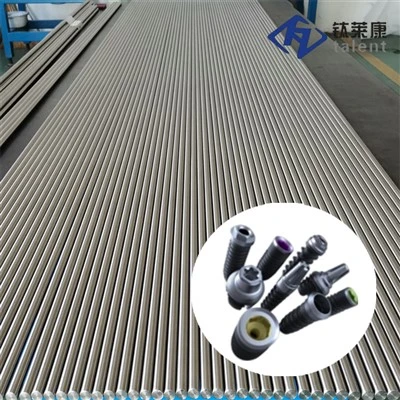
If you’re a dentist, lab tech, or practice manager who’s been guessing which alloy to use, or just wanna switch to a supplier that actually knows the difference, we’re here to help. We don’t do one-size-fits-all, because we know every dental project is different. Shoot us a message, tell us what you’re working on, and we’ll hook you up with the right discs—whether you need 10 pieces for a small lab run or 10,000 for a big dental group order. No pushy sales stuff, just honest advice and quality discs that work.
Medical Titanium Plates References
- American Dental Association. (2022). Titanium Alloys in Dental Implants: Clinical Guidelines and Material Specifications.
- International Organization for Standardization. (2020). ISO 10993-1: Biological evaluation of medical devices – Part 1: Evaluation and testing within a risk management process.
- Journal of Prosthetic Dentistry. (2021). A Review of Titanium Alloys for Dental Applications: Biocompatibility, Mechanical Properties, and Clinical Performance.
Baoji Tailaikang High-Tech Metal Materials Co., Ltd.
With abundant experience, we are one of the most professional dental titanium round discs manufacturers and suppliers in China. Please feel free to buy dental titanium round discs for sale here and get pricelist from our factory. For price consultation, contact us.
Address: No. 1, Southeast Cross of Gaoxin Avenue and Fenghuang 3rd Road, High-tech Development Zone, Baoji City, Shaanxi Province, China
E-mail: sale@tlkjs.com
WebSite: https://www.tlkmetal.com/
