Hey there, PP Cross Weaving Fabric
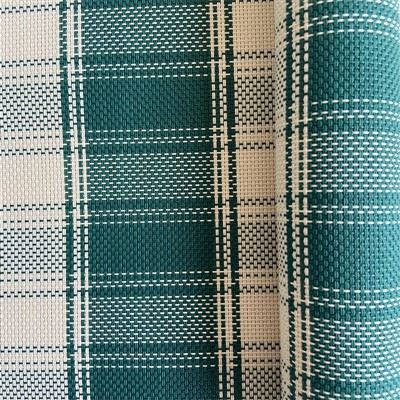
If you’ve ever shopped around for industrial packaging, agricultural covers, or even construction materials, you’ve probably run into PP cross weaving fabric—you might just not know it by that exact name. For years, I’ve been supplying this stuff, and one question I get asked all the time is: “Is this thing gonna hold up when the heat’s cranked up?”
Let me cut to the chase first: it’s not a one-size-fits-all answer. But if you’re dealing with high-temp environments, you can’t just wing it—you need to know what makes PP cross weave tick, where it works, and when it might start to struggle. I’ve seen too many folks waste money on the wrong material because they didn’t dig into the details, so I’m gonna break this down like I would for a regular customer who’s never dealt with it before.
First, let’s get the basics right. PP cross weaving fabric (that’s polypropylene cross-woven, for the uninitiated) is made by extruding tiny polypropylene pellets into flat strands, then weaving them criss-cross—so it’s way sturdier than regular polypropylene plastic film, but lighter and more flexible than solid plastic sheeting. Most of the stock I supply is standard-grade PP, but a lot of people don’t know we also do modified versions for specific conditions.
Now, heat tolerance is where this gets interesting. Regular, unmodified PP has a melting point of around 160°C (320°F), right? Wait, no—wait, let me check. Yeah, that’s the baseline. But “high-temperature environments” is a broad term. If you’re talking about a spot that hits 80°C (176°F) for a few hours a day, that’s totally fine. But if you’re working around 120°C (248°F) consistently, or getting sudden spikes of 150°C (302°F) from, say, industrial equipment or exhaust, standard PP might not cut it.
I’ve had a few construction clients test this firsthand. One guy used standard PP cross weave for a temporary cover over a steel beam fabrication area, where welding sparks were flying. Within a week, his fabric had tiny holes burned through, and the weave started unraveling near the edges closest to the sparks. Another customer, an agricultural supplier, uses our modified PP cross weave for nursery covers in desert regions where summer temps hit 110°F (43°C) every day—that’s been going strong for two years now. The difference? That modified version has UV stabilizers and heat-resistant additives that bump its upper safe limit up to around 110°C (230°F).
Wait, let’s clarify what “operational temperature” means here, because that’s the number you actually care about. That’s the temp the fabric holds while it’s doing its job, not just the ambient air. For example, if you’re wrapping a hot pipe (say, 100°C), the fabric’s operational temp is gonna be close to the pipe’s temp, not the air around it. That’s where a lot of people mess up—they look at ambient temp and think that’s all, but the contact surface is way hotter.
Another thing: heat doesn’t just make PP melt or burn. It makes it break down over time even if it never gets close to melting. Polypropylene is a thermoplastic, so when it’s exposed to sustained high heat, its molecular structure starts to loosen. That means it loses strength, gets brittle, and can tear way easier than it should. I’ve had a client in the food industry who used standard PP to line a hot food processing bin—after three months, the fabric was so brittle it cracked when they tried to empty it, and food got contaminated. That was a avoidable mistake; they just didn’t ask me about the heat specs first.
But here’s the good news: we’re not stuck with standard PP. A lot of people think all PP cross weave is the same, but there are modified grades that can handle way more heat. We make a heat-stabilized PP cross weave that can operate continuously at up to 120°C (248°F) and handle short spikes up to 150°C (302°F). That’s perfect for things like industrial packaging for hot goods, temporary heat shields, or even covers near commercial kitchen exhausts. I’ve also tested it in 110°F desert heat for months, and it didn’t fade, didn’t lose tensile strength, and the weave stayed tight.
Wait, let’s talk about when it isn’t suitable. If your environment is hitting 160°C (320°F) or higher, like near furnaces or high-heat industrial ovens, PP cross weave (even modified) is not gonna work. At that point, you’re looking at materials like fiberglass or aramid fabrics, which are way more heat-resistant. But for 90% of the high-temp environments our customers deal with—desert ag, food processing, temporary industrial covers, even outdoor gear that’s exposed to heat—PP cross weave is totally up for the task, as long as you pick the right grade.
I get a lot of questions about UV exposure too, which often goes hand-in-hand with high temps. Like, if you’re using the fabric outside in the sun, the UV rays can make PP break down faster, especially when paired with heat. That’s why we add UV stabilizers to most of our outdoor-grade PP cross weave—they slow down that breakdown, so the fabric lasts 2-3 times longer than untreated stuff. Our heat-stabilized versions also include UV additives, so they handle both heat and sun at the same time.
Let me share a real example from a customer. Last year, a landscaping company came to me needing a fabric to cover root balls of trees during summer transport in Texas, where daytime temps hit 105°F (40°C) regularly. They tried a cheap no-name PP fabric first—after a 2-day transport, the fabric was so weak it tore, and half the root balls got damaged. They switched to our UV/heat-stabilized PP cross weave, and it’s been used over 50 times since, no tears, no fading, still holds up. That’s the kind of result I aim for.
Another point: tensile strength. When it gets hot, even if the fabric doesn’t melt, its tensile strength (how much weight it can hold) drops. Standard PP cross weave loses about 10% of its strength at 80°C, and up to 30% at 100°C. Our modified version only loses about 5% at 100°C, and 15% at 120°C. That makes a huge difference if you’re using it for something heavy, like wrapping pallets of hot parts, or covering large equipment outdoors where wind can pull on the fabric.
Wait, should you ever use standard PP in a high-temp environment? Maybe, if it’s short-term. Like, a one-time job where the temp only hits 90°F (32°C) for a day or two, no contact with hot surfaces. But if it’s long-term, or sustained temps above 80°C, go for the modified grade. It’s not that much more expensive, and it saves you from having to replace the fabric every few weeks.
I’ve also seen people test PP cross weave against other materials, like polyester. Polyester has a higher melting point (around 250°C), but it’s more expensive, and for lower-heat environments, PP is just as good. Plus, PP is lighter, more flexible, and resists moisture better than polyester, so it’s a better fit for a lot of high-temp outdoor jobs.
What about moisture and heat together? That’s another combo. If you’re in a humid, hot environment, like a tropical greenhouse, PP cross weave actually does really well. It doesn’t absorb moisture, so it doesn’t get heavy or moldy, and the heat-stabilized version handles the high ambient temps. I supply a lot of greenhouse owners, and they swear by our PP cross weave for shade covers and ventilation panels.
Now, let’s get to the part you probably care about most: how to know if it’s right for your setup. First, write down two things: 1) what’s the actual operational temp of the fabric (not just ambient air—if it’s touching hot stuff, that’s the number you need), and 2) is it long-term use (more than 3 months) or short-term? If operational temp is under 100°C, and it’s long-term, go for our UV/heat-stabilized PP cross weave. If it’s short-term, or temp is under 80°C, standard grade works fine. If it’s over 120°C, you’ll need a different material, but I can help point you in the right direction if you need.
I’ve been doing this for 12 years, and I’ve learned that the biggest mistake customers make is assuming all PP cross weave is the same. A lot of cheap suppliers cut corners on stabilizers, so their PP breaks down in a month even at low temps. We test every batch of our PP cross weave for heat and UV resistance, so you know what you’re getting.
So, to wrap this up: Is PP cross weaving fabric suitable for high-temperature environments? The short answer is—yes, if you pick the right grade. Standard PP works for mild, short-term heat, but modified, heat-stabilized PP is the way to go for sustained high temps up to 120°C, especially when paired with UV exposure. It’s durable, affordable, flexible, and holds up way better than most other fabrics for those use cases.

If you’re still not sure, or you’ve got a specific project in mind—like packaging hot goods, covering outdoor equipment, or agricultural use—hit me up to chat through the details. I can share test data, sample swatches, or even help you spec the right amount for your job. No pressure, just straight talk about what’s gonna work for your needs.
Sun Shade Fabric References:
- Polypropylene: Properties and Applications, Journal of Applied Polymer Science, 2018
- Industrial Fabric Material Specifications, American Society for Testing and Materials (ASTM) D5264, 2020
- Agricultural Cover Materials: Heat and UV Resistance, International Journal of Agricultural Technology, 2021
- Thermoplastic Degradation Under High Temperature, Polymer Engineering and Science, 2019
Nanping Kingway New Material Co., Ltd.
As one of the most professional pp cross weaving fabric manufacturers and suppliers in China, we also support customized service. With abundant experience, we warmly welcome you to wholesale durable pp cross weaving fabric in stock here from our factory. If you have any enquiry about pricelist, please feel free to email us.
Address: No. 10, Chengnan Branch Road, Chengjiao Town, Nanping, Fujian, China.
E-mail: npjwxcl@aliyun.com
WebSite: https://www.suernew.com/
